

close
Choose Your Site
Global
Social Media
Views: 0 Author: Site Editor Publish Time: 2026-08-21 Origin: Site


Screening efficiency dictates the ultimate throughput of any mineral processing or aggregate production plant. The screening circuit frequently acts as the primary bottleneck, dictating how much material passes to downstream crushers, mills, or final stockpiles. Specifying the wrong screen geometry or vibration trajectory carries severe operational consequences. Plant operators often face chronic blinding, severe pegging, excessive media wear, or a complete failure to meet daily tonnage targets simply because the equipment kinematics do not match the feed material.
Resolving these bottlenecks requires aligning the mechanical motion of the screen with the physical behavior of the ore or aggregate. Evaluating a banana screen vs linear vibrating screen represents a fundamental engineering decision. This choice is driven entirely by feed characteristics, volumetric capacity requirements, and specific application goals such as bulk sizing versus fine dewatering. Making the correct selection ensures continuous material flow and protects downstream assets.
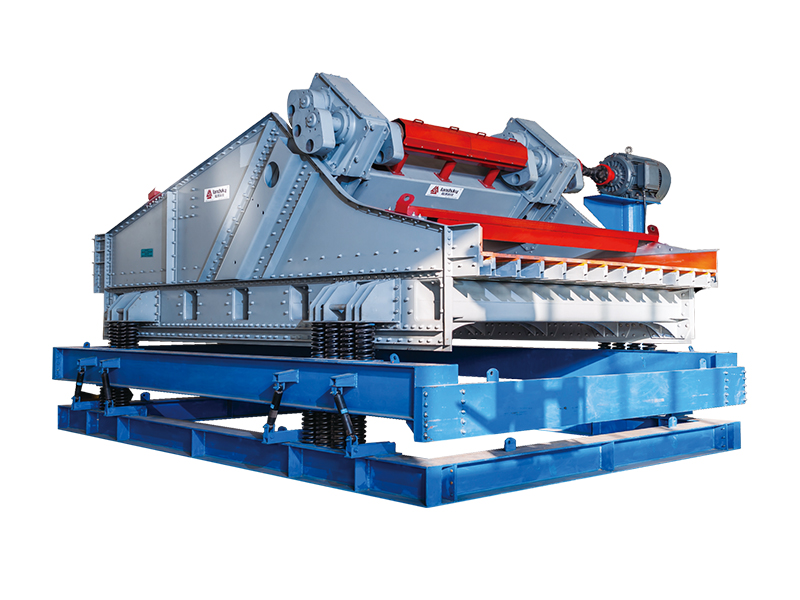
Kinematic Differences: Banana screens utilize a curved, multi-slope deck to rapidly stratify deep material beds, whereas linear screens use a simpler directed, straight-line throw (vertical and forward motion) to combine screening with material conveying.
Capacity vs. Precision: Banana screens deliver significantly higher throughput for bulk materials with high fines content; linear screens excel in tight-tolerance fine cuts, washing, and dewatering applications.
Dual Functionality: Linear vibrating screens uniquely serve a dual purpose, acting as both a highly accurate sizing mechanism and a horizontal material transfer conveyor.
Footprint Realities: Banana screens require substantial vertical headroom due to their steep initial incline, while linear screens demand a larger horizontal footprint.
Cost Implications: Banana screens generally require higher initial CAPEX and heavier structural support, but offer lower OPEX per ton in high-volume applications compared to linear alternatives.
Table of Contents
Banana screens derive their name from their distinctive variable-angle, curved deck design. The screening surface typically begins with a steep gradient ranging from 34° to 40° at the feed end. As the deck progresses toward the discharge end, the angle gradually flattens out, often finishing at a shallow 10° to 15° incline. This multi-slope geometry is engineered specifically to manipulate material velocity and bed depth across the entire length of the machine. The structural frame is heavily reinforced to handle the massive dynamic loads generated by the exciters and the sheer weight of the incoming material.
The physics of this design rely on rapid stratification. When a high volume of bulk material hits the steep feed section, gravity accelerates the mass. This high velocity immediately thins the material bed. Thinning the bed allows undersize particles, commonly referred to as fines, to percolate through the coarse rock and reach the screen media instantly. Because the fines pass through the apertures without delay, the screen avoids the bottlenecking effect where large rocks trap smaller particles on top of the deck. In high-tonnage primary crushing circuits, this rapid removal of fines is the only way to prevent the screen from becoming overwhelmed by the sheer volume of run-of-mine ore.
As the material travels further down the deck, the slope angle decreases. This transition slows the remaining material down. The reduced velocity at the flatter discharge end increases the retention time for the remaining near-size particles. These particles require more time to find an aperture and pass through. By combining high-velocity bulk removal at the feed end with low-velocity precision screening at the discharge end, the banana screen optimizes both capacity and separation efficiency. The exciters typically generate an elliptical or linear stroke, but it is the gravity-assisted deck geometry that performs the heavy lifting.
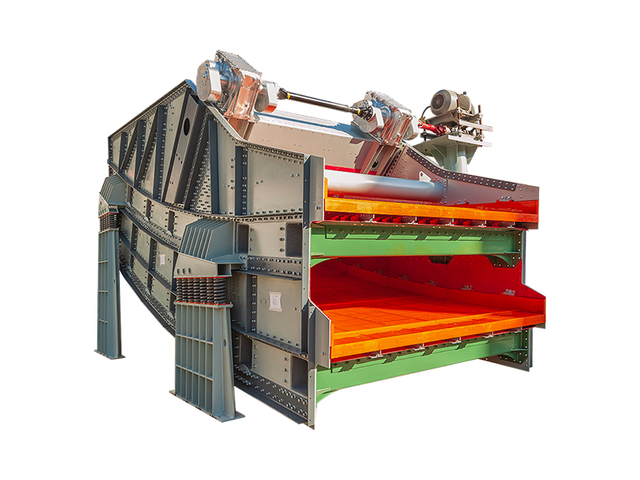
Linear vibrating screens feature a horizontal or very low-incline deck design. They are typically powered by twin counter-rotating vibratory motors or heavy-duty geared exciters driven by cardan shafts. These drive mechanisms synchronize to cancel out circular forces and produce a purely linear vibration trajectory. The resulting motion combines vertical lift with forward propulsion, driving the material in a uniform, straight line across the screening surface. The side plates are usually huck-bolted rather than welded to prevent fatigue cracking under the continuous linear stress.
The vibration method is highly controlled. Engineers usually configure the linear trajectory at a 45° throw angle relative to the deck. This specific angle lifts the particles out of the screen apertures, preventing pegging, and tosses them forward. Every particle experiences the exact same micro-ballistic trajectory, ensuring uniform retention time and highly predictable material behavior from the feed box to the discharge lip. You can calculate exactly how long a particle will stay on the deck based on the stroke length and operating frequency, which allows for highly precise cut points.
This straight-line throw gives linear screens a unique dual functionality. They perform accurate sizing while simultaneously acting as a horizontal material transfer conveyor. In many plant layouts, this eliminates the need for an intermediate conveyor belt between processing stages. The material marches steadily forward regardless of the deck incline, allowing operators to install these screens completely flat or even at a slight uphill angle for specific processing needs like dewatering or rinsing.
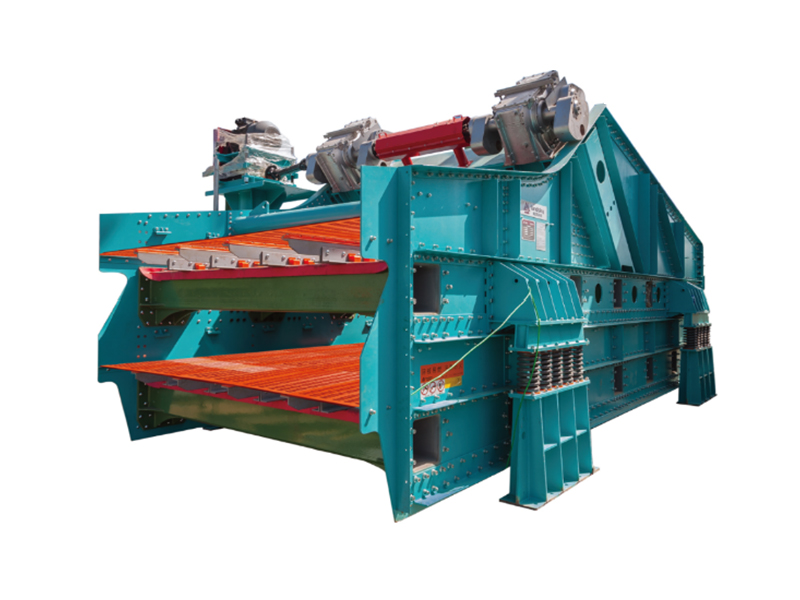
Contrasting the vibration trajectories reveals exactly how each machine handles material flow. The linear screen relies entirely on its consistent vertical-and-forward motion. Because the deck is flat, the velocity of the material is dictated purely by the stroke length, frequency, and throw angle of the vibratory motors. This provides a highly uniform retention time. Every rock or grain of sand spends a predictable amount of time on the deck, which is necessary for making precise, sharp cuts in the material. The bed depth remains relatively constant from the feed end to the discharge end.
Conversely, the banana screen relies on varying deck angles to artificially manipulate material velocity and bed depth. The steep initial slope forces the material to race across the first few panels, tearing apart cohesive bonds and dropping fines immediately. The trajectory is less about throwing the material forward and more about agitating the bed while gravity pulls the mass down the curved slopes. The bed depth is extremely thin at the feed end and gradually thickens as the material slows down on the flatter sections.
Volumetric limits heavily favor the multi-slope design. Banana screens routinely handle up to 30% to 40% more capacity than standard flat screens occupying the exact same footprint. This massive increase in throughput stems directly from the rapid removal of fines at the feed end. By eliminating half of the material volume in the first third of the screen length, the remaining deck area is freed up to process the difficult near-size material without overloading. Plants looking to upgrade capacity without expanding their building footprint often replace flat screens with banana screens.
Linear screens face stricter capacity limits in bulk applications. While they offer higher capacity than traditional rotary or circular screens for fine applications, they remain highly susceptible to bed-depth overload. If feed rates spike, the flat deck cannot accelerate the material away from the feed zone fast enough. The material bed deepens, cushioning the vibration. Fines become trapped in the upper layers of the bed, failing to reach the screen media, which ultimately destroys screening efficiency and sends undersize material to the oversize chute as carryover.
Analyzing performance based on Particle Size Distribution (PSD) is critical for selection. Banana screens are the optimal choice when the feed contains a high percentage of fines or undersize material. If the feed consists of more than 40% undersize particles, a flat screen will struggle to process the volume. The banana screen's steep feed section easily handles this high-fines ratio, dropping the undersize material out of the circuit before it can cause congestion. This makes them ideal for secondary and tertiary crushing circuits where the circulating load contains massive amounts of fines.
Moisture content dictates a different approach. Linear screens are vastly superior for wet applications, heavy slurries, and sticky materials. The aggressive linear ejection provides high G-forces that continuously punch material out of the apertures, preventing blinding. Furthermore, wet sticky clay or slurry would simply rush down the steep slope of a banana screen without separating. The flat deck of a linear screen forces the material to spread out, allowing wash water to penetrate the bed and separate the sticky fines from the coarse aggregate.
Cut-point accuracy separates the two technologies in fine applications. Linear screens achieve exceptionally tight tolerances for fine cuts. Industries processing industrial sand, specialized chemicals, or food-grade materials rely on the uniform retention time of the linear throw. Because the material travels at a constant speed, particles have thousands of opportunities to present themselves to the screen apertures, ensuring a highly accurate separation with minimal misplaced particles.
The mechanics of dewatering and washing rely heavily on linear motion. To dewater sand or tailings, operators often incline the linear screen uphill at 3° to 5°. The linear throw propels the solid particles up the incline. Meanwhile, gravity pulls the water back down through the deep material bed, which acts as a filter medium. The water drains through the screen panels, while the dry solids discharge over the top lip. This uphill dewatering process is physically impossible on a multi-slope banana deck.
Spatial evaluation often dictates the final equipment choice regardless of process preference. Banana screens require a significant vertical drop. The steep 40° feed angle means the feed box sits very high above the discharge lip. This necessitates complex chute design, extensive vertical headroom, and massive structural steelwork to support the height. Retrofitting a banana screen into an existing low-profile plant is often structurally impossible without major facility modifications and extended downtime.
Linear screens demand a larger horizontal footprint but require minimal headroom. Their flat profile allows for easy integration into low-profile modular plants or existing horizontal crushing circuits. Because they also convey material horizontally, they can bridge gaps between processing stages, simplifying the overall plant layout. Plant designers often favor linear screens when vertical space is restricted or when building mobile and semi-mobile processing skids.
Technical Parameter | Banana Screen | Linear Vibrating Screen |
|---|---|---|
Deck Geometry | Multi-slope, curved (34° down to 10°) | Flat, horizontal, or slight uphill incline |
Primary Function | High-capacity bulk sizing, rapid fines removal | Precision sizing, washing, dewatering, conveying |
Material Velocity | Variable (fast at feed, slow at discharge) | Constant and uniform across the entire deck |
Fines Handling | Excellent for feeds with >40% fines | Prone to bed overload if fines volume spikes |
Moisture Handling | Best for dry or slightly damp bulk materials | Superior for wet, sticky, or slurry applications |
Space Requirements | Requires massive vertical headroom | Requires larger horizontal footprint |
High-tonnage hard rock mining operations represent the primary domain for multi-slope technology. Copper, gold, and iron ore processing plants deal with massive throughput requirements, often exceeding thousands of tons per hour. In these environments, the primary goal is bulk volume reduction. The screen must survive heavy impact and process massive surges of run-of-mine material without bogging down. The heavy-duty exciters and steep deck angles ensure the material keeps moving even under extreme surge conditions.
Coal preparation plants also rely heavily on this technology for run-of-mine screening. Coal feeds typically contain a massive volume of fine particles generated during extraction. The multi-slope deck efficiently strips these fines away from the coarse coal. This prevents the fines from absorbing excess moisture in downstream washing circuits, which would otherwise complicate the drying process and lower the final calorific value of the coal product.
Specify this technology for any application requiring the immediate removal of a large volume of fines to protect downstream crushers. Sending fines into a cone crusher causes packing, power spikes, and mechanical damage to the mantle and bowl liner. The rapid stratification of the curved deck ensures that only clean, coarse rock enters the crushing chamber, maximizing crushing circuit efficiency and protecting expensive wear parts from premature failure.
Aggregate washing and sand dewatering circuits depend almost exclusively on straight-line throw technology. Producing clean concrete sand requires aggressive washing to remove clay, followed by rigorous dewatering to meet strict moisture specifications. The flat or uphill deck configuration provides the necessary retention time for the wash water to work, while the linear stroke drives the dewatered sand to the discharge chute. The deep material bed acts as its own filter, trapping fine sand while letting water escape.
Tramp material removal and carbon-in-leach (CIL) interstage screening in gold recovery also require this specific motion. These processes involve separating fine carbon particles from dense slurries. The linear motion prevents the screen panels from blinding while gently conveying the carbon forward without causing excessive abrasion or degradation of the carbon granules. The flat deck ensures the slurry spreads evenly across the entire width of the screen, maximizing the open area utilization.
Chemical processing, recycled concrete aggregate (RCA), and food-grade applications require strict sizing control and simultaneous material transfer. When a process demands zero tolerance for oversize particles in the final product, the predictable, uniform travel speed of the flat deck ensures every particle is accurately sized before leaving the machine. The ability to convey material horizontally also allows these screens to fit neatly into tight indoor processing facilities.

The most severe risk in screen implementation involves inadequate structural support. A vibrating screen generates massive dynamic loads. If the supporting steelwork is too weak, or if its natural frequency matches the operating frequency of the screen, resonance occurs. Resonance amplifies the vibration, leading to catastrophic structural failure, cracked side plates, or severe fatigue in the building infrastructure. The entire plant can shake violently if the isolation system fails.
Mitigating this risk requires rigorous engineering upfront. Conducting Finite Element Analysis (FEA) on both the screen body and the supporting structure is mandatory. Engineers must implement proper isolation springs, rubber buffers, or dynamic sub-frames tailored to the specific vibration trajectory and mass of the chosen screen. Proper isolation ensures that the kinetic energy remains in the screen deck to process material, rather than bleeding into the plant structure and causing collateral damage.
Selecting the wrong screen media geometry for the vibration type leads directly to blocked apertures. Blinding occurs when moisture and fines coat the screen, while pegging happens when near-size rocks wedge tightly into the holes. If the media does not complement the machine's kinematics, the open area drops to zero, and screening ceases entirely. Operators are then forced to shut down the plant and manually beat the screen panels with mallets to clear the blockages.
Mitigation involves matching the aperture shape and material to the specific throw action, deck gradient, and feed moisture. For a steep multi-slope deck, heavy-duty polyurethane or rubber panels with relief-tapered holes prevent pegging. The taper allows any rock that enters the top of the hole to fall freely through the bottom. For a flat deck handling wet material, slotted apertures or self-cleaning wire mesh flex with the linear stroke, actively ejecting wedged particles and shedding sticky clay.
Poor feed distribution destroys screening efficiency regardless of the machine type. If the feed chute dumps material onto one side of the screen, that side will suffer accelerated wear and bed overload, while the other side remains empty. Furthermore, if the material hits the deck at too high a velocity, it will bounce across the panels without ever presenting itself to the apertures, resulting in massive carryover of undersize material into the oversize bin.
To mitigate this, operators must install properly designed feed boxes equipped with velocity breakers. These rock boxes force the material to impact against itself, killing the velocity before it gently overflows onto the full width of the screen deck. Distributing the feed evenly ensures the entire open area of the screen is utilized, maximizing throughput and ensuring even wear across all screen panels.
Synthetic screen media dominates modern heavy-duty screening applications. Polyurethane panels offer exceptional wear resistance in wet applications and are highly effective on linear screens used for washing and dewatering. They are manufactured with precise durometer ratings to balance flexibility with abrasion resistance. Rubber panels, on the other hand, excel in high-impact dry applications. The steep feed end of a banana screen almost always utilizes thick, heavy-duty rubber panels to absorb the kinetic energy of large rocks dropping from the feed chute.
Woven wire mesh provides the highest possible open area, making it ideal for maximizing throughput in fine sizing applications on linear screens. However, wire mesh wears out much faster than synthetic media and is highly susceptible to pegging if the material contains a lot of near-size particles. Perforated steel plates offer a middle ground. They provide excellent structural integrity and impact resistance for scalping applications, though they offer less open area than wire mesh. Operators must constantly balance the need for open area against the required wear life of the media.
The method used to secure the screen media to the deck cross beams impacts maintenance downtime significantly. Traditional side-tensioned wire mesh requires operators to manually tighten bolts along the side plates, which is time-consuming and prone to uneven tensioning. Modern banana and linear screens utilize modular pin-and-sleeve or snap-in fastening systems. These modular systems allow maintenance crews to replace only the specific 1x1 foot panels that are worn out, rather than replacing an entire sheet of wire mesh. This drastically reduces downtime and lowers consumable costs over the life of the machine.
The choice between these two screening technologies is a strict engineering calculation to determine which kinematics best match the feed's particle size distribution, moisture content, and the spatial constraints of the processing plant. Banana screens dominate high-tonnage, high-fines dry sizing where headroom permits. Linear screens remain the undisputed choice for dewatering, washing, tight-tolerance fine sizing, and low-profile installations requiring horizontal material transfer.
As an industry pioneer in advanced screening solutions and high-performance mineral processing equipment, Shanghai Kminda Tech. Co., Ltd. combines decades of specialized engineering expertise with state-of-the-art manufacturing to deliver tailored banana and linear vibrating screens that maximize plant throughput and operational uptime in demanding applications worldwide.
Conduct a comprehensive laboratory sieve analysis of your feed material to determine the exact percentage of fines and near-size particles before selecting a deck geometry.
Consult with OEM application engineers to map the moisture content and cohesiveness of your material against the proposed vibration trajectory and G-force.
Request a simulated mass balance flow sheet from your equipment provider to verify that the chosen screen geometry can handle your peak surge tonnages without bed overload.
Perform a spatial audit of your plant to confirm adequate vertical headroom for multi-slope designs or sufficient horizontal footprint for flat deck installations.
A: The primary difference lies in the deck geometry and material flow. A banana screen features a multi-slope, curved deck designed for the rapid stratification and removal of high-volume fines. A linear vibrating screen utilizes a flat deck and a straight-line throw, designed for precision sizing, washing, and conveying material horizontally.
A: Circular screens handle general high-volume aggregate sizing, while rotary screens process very fine, light materials. Linear screens provide tighter tolerances and dewatering capabilities absent in circular screens. Banana screens offer vastly higher throughput for high-fines bulk materials than any standard circular model of the same footprint.
A: Yes, but it requires a significantly larger horizontal footprint compared to a banana screen. Processing the same high-tonnage bulk material on a flat deck risks overloading the material bed, which traps fines and destroys screening efficiency unless the machine is exceptionally wide and long.
A: Linear vibrating screens are the industry standard for dewatering and washing. Their linear vertical-and-forward motion effectively propels solid particles forward, even up a slight incline, while allowing water to drain efficiently downward through the deep material bed and screen media.
A: The multiple slopes manage material velocity. The steep initial gradient rapidly thins the material bed, allowing fines to fall through immediately. The flatter subsequent slopes then slow the remaining near-size material down, providing the necessary retention time for accurate final separation.
A: Media selection must account for the screen's G-force, vibration trajectory, material abrasiveness, and moisture content. Polyurethane is highly common for wet linear screens due to its wear resistance, while heavy-duty rubber or thick steel plate is often required to survive the high-impact zones of a banana screen.


