

close
Choose Your Site
Global
Social Media
Views: 0 Author: Site Editor Publish Time: 2026-04-10 Origin: Site


The performance of a Multi Layer Stack Vibrating Fine Screen largely depends on two primary factors: the mesh size and the inclination angle. These factors influence how well the screen separates fine particles from coarse ones and determine the efficiency of the entire screening process. Mesh size refers to the size of the apertures in the screen, which dictates how small a particle can pass through. Inclination angle refers to the angle at which the screen is positioned relative to the horizontal, affecting the flow rate and screening accuracy. Both must be selected carefully to meet specific processing requirements and material characteristics.
Mesh size is a key factor in determining the separation ability of the Multi Layer Stack Vibrating Fine Screen. It refers to the number of openings per linear inch in the screen, typically measured in mesh per inch or microns. Smaller mesh sizes are ideal for fine screening, where small particles need to be separated, while larger mesh sizes are suited for separating coarse materials. The choice of mesh size impacts the throughput, separation efficiency, and wear rate of the screening equipment.
The selection of mesh size depends on the type of material being processed and the desired particle size distribution. Fine materials, such as powders or small particles, require smaller mesh sizes, while larger particles can be screened with larger mesh sizes. It's essential to balance between screening efficiency and throughput. A finer mesh might reduce the throughput, while a coarser mesh can lead to lower separation accuracy.
For materials with a broad particle size distribution, a larger mesh size may be used for coarse separation, while a finer mesh size can be employed in a subsequent screening stage for fine particles. If the material is sticky or moist, it may clog finer meshes, requiring a larger mesh size or a more frequent cleaning schedule. The wear rate of the screen mesh also depends on the type of material, with abrasive materials requiring more durable screen media.
Material Type | Recommended Mesh Size | Screening Goal | Effect on Efficiency |
Coarse Aggregate | 10–20 mm | Coarse separation | Faster throughput, lower precision |
Fine Sand | 0.5–2 mm | Fine particle separation | Higher precision, slower throughput |
Slurry/Sludge | 0.1–0.5 mm | Dewatering & fine screening | Prevents clogging, moderate throughput |
Powdered Materials | 50–100 microns | Fine screening & separation | Very high precision, very slow throughput |
The inclination angle of the Multi Layer Stack Vibrating Fine Screen refers to the angle between the screen deck and the horizontal surface. This angle plays a vital role in determining how quickly the material moves across the screen. The steeper the inclination, the faster the material moves, while a lower inclination angle allows the material to stay on the screen for a longer period, providing better separation.
· Increasing the Angle: A higher inclination angle increases the material’s flow rate but reduces separation accuracy because the material moves quickly across the screen, not giving enough time for proper classification.
· Decreasing the Angle: A lower inclination angle improves separation accuracy by giving particles more time to stratify, but it reduces throughput as the material moves more slowly.
The choice of inclination angle also depends on the material’s characteristics. Heavier, more compact particles benefit from a steeper angle for faster material movement. In contrast, finer materials or sticky substances that require more time for accurate separation may be best handled with a shallower angle.
Material Type | Recommended Inclination Angle | Separation Goal | Effect on Efficiency |
Heavy, Coarse Particles | 15–20° | Quick separation of large particles | Faster throughput, lower accuracy |
Fine Sand/Slurry | 5–10° | Accurate fine separation | Better stratification, lower throughput |
Wet, Sticky Materials | 10–15° | Prevent clogging & improve flow | Optimized material movement, moderate accuracy |
Dry Powdered Materials | 20–25° | Fast processing | Quick throughput, reduced separation efficiency |
The best performance in a Multi Layer Stack Vibrating Fine Screen is achieved when both mesh size and inclination angle are optimized to work together. Mesh size dictates the smallest particle size that can pass through the screen, directly impacting the separation efficiency and accuracy. On the other hand, the inclination angle affects the material flow and the time particles spend on the screen. The steeper the angle, the faster the material moves, while a shallower angle allows the material more time to stratify and separate. When mesh size and inclination angle are carefully matched, they enable an efficient balance between throughput and separation precision. For example, a smaller mesh size paired with a moderate inclination angle provides a good balance for fine material screening, ensuring accurate separation while maintaining reasonable throughput.
In practice, achieving an optimal balance between flow rate and separation precision is essential, as these factors are often in tension with one another. For applications that prioritize high throughput, such as when processing bulk materials or coarse particles, a larger mesh size combined with a steeper inclination angle may be the best solution. This configuration allows material to move quickly across the screen, increasing throughput while sacrificing some precision in the separation process. However, when fine particle separation is crucial, a smaller mesh size and lower inclination angle will provide better separation accuracy, as it gives particles more time to stratify properly. This comes at the cost of reduced throughput, but it is essential for applications that require precise classification of fine materials. The optimal combination of mesh size and inclination angle will depend on the specific material being processed, its particle size distribution, and the desired separation goals.
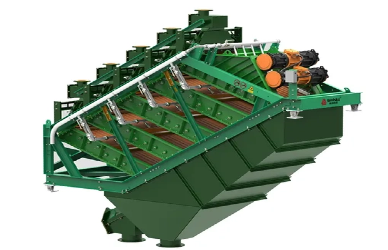
For materials with mixed sizes, larger mesh sizes should be used for coarse particles, while smaller meshes should handle finer fractions. This can reduce wear on the mesh while improving screening efficiency.
Heavier particles benefit from a steeper inclination angle to increase their velocity, while lighter materials might require a shallower angle to prevent them from being ejected off the screen prematurely.
Wet or sticky materials can cause screen clogging, necessitating a larger mesh size and possibly a lower inclination angle to ensure proper flow and prevent material buildup.
For materials in mining applications, such as ores or aggregates, larger mesh sizes and steeper inclination angles are often used to achieve faster throughput, as material volume is a primary concern. However, for fine materials like crushed stone, smaller mesh sizes and moderate angles are necessary to ensure precision in particle separation.
In applications where purity and product quality are critical, such as in the chemical and food industries, smaller mesh sizes and lower inclination angles are preferred to ensure fine separation of particles and prevent cross-contamination.
Larger mesh sizes allow faster material flow but may sacrifice separation accuracy, as larger particles can pass through without proper sorting. Smaller mesh sizes slow down the flow but significantly improve fine particle separation. When selecting mesh size, it’s important to balance throughput with the desired separation precision, especially when processing fine materials or dealing with critical separation tasks.
A steep inclination angle increases the speed at which material moves across the screen, allowing for faster processing. However, this typically reduces separation accuracy, which can result in poor stratification of the material. Fine particles may fail to separate properly, and heavier particles may be ejected prematurely. As a result, the screen's ability to classify materials accurately is compromised, making it essential to find the right balance for specific screening needs.
Yes, a lower inclination angle improves separation efficiency by giving the material more time to stratify and sort, allowing for better classification of particles by size and density. However, the trade-off is a slower throughput. This setting is particularly beneficial when fine separation is critical, such as in processing fine powders or other materials requiring high classification precision. The challenge lies in balancing separation precision with throughput speed.
The optimal settings for mesh size and inclination angle depend on the characteristics of the material being processed. Factors such as particle size, density, moisture content, and material flow characteristics all influence the choice. For example, materials with a broad particle size distribution may require a larger mesh size, while sticky or moist materials might benefit from a smaller mesh size to prevent clogging. The inclination angle should be adjusted based on whether you prioritize throughput or precise separation. Understanding these factors helps determine the most efficient setup for your specific screening requirements.
The selection of mesh size and inclination angle for a Multi Layer Stack Vibrating Fine Screen is critical for achieving optimal screening performance. Understanding the relationship between mesh size, inclination angle, material characteristics, and specific application needs is key to balancing separation precision with throughput. Whether for fine screening in mining, food processing, or chemical industries, the proper combination of mesh size and inclination angle ensures that the screen performs efficiently, with minimal downtime and maximum throughput. At Shanghai Kminda Tech. Co., Ltd., we provide expert guidance to help you optimize these parameters based on your specific requirements, ensuring that your equipment delivers the best performance possible.
