

close
Choose Your Site
Global
Social Media
Views: 0 Author: Site Editor Publish Time: 2026-08-21 Origin: Site


Unscheduled downtime in mineral processing circuits causes massive bottlenecks. When screening equipment fails, crushers choke on undersized rock, mills draw excess power, and product yield drops. Operations need reliable separation. You face a direct conflict: pushing high throughput while handling extreme abrasion, heavy impact loads, and continuous 24/7 operation in harsh mining environments.
Standard aggregate equipment shatters under run-of-mine ores. You need a systematic framework for evaluating, sizing, and selecting a heavy duty screen that maximizes yield and matches specific ore characteristics. This guide breaks down the physical mechanics, media selection, and sizing calculations required to build a resilient screening circuit.
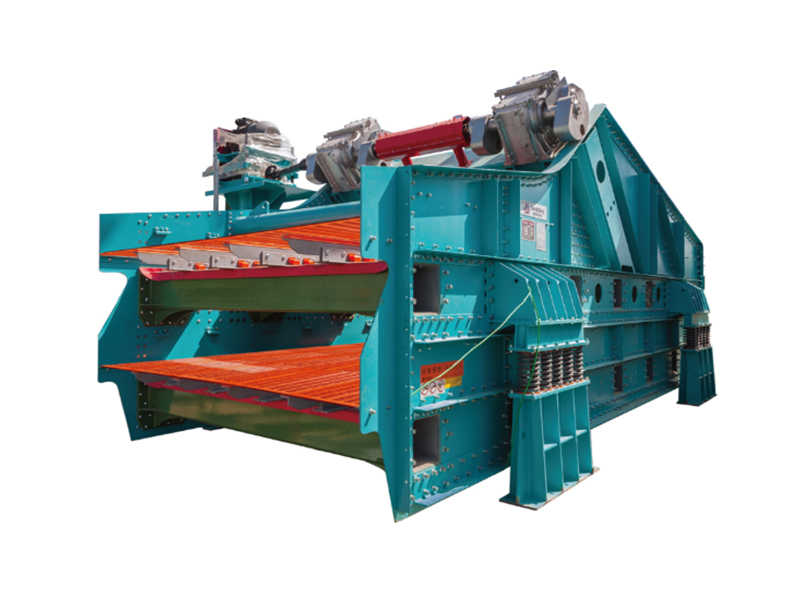
Equipment selection must strictly align with the specific duty (e.g., scalping, sizing, dewatering) and the physical properties of the feed material.
Screen media choices (such as manganese steel vs. polyurethane) fundamentally dictate wear life, maintenance intervals, and screening efficiency.
Accurate sizing requires moving beyond baseline capacity charts to account for wet/dry conditions, particle size distribution (PSD), and bed depth.
Table of Contents
Success in mineral screening requires a precise balance between volume and accuracy. Pushing maximum tonnage often destroys the precision of the cut. Understanding the physical dynamics of your specific application dictates the mechanical requirements of the machine.
Throughput and efficiency share an inverse relationship. Pushing material across a deck too quickly increases capacity but ruins precision. Material needs time to stratify. Stratification is the physical process where vibration shakes the material bed, causing smaller particles to settle at the bottom and find the screen openings. If the feed rate is too high, the bed becomes too deep. Fines never reach the deck surface and end up bypassing the apertures, carrying over into the oversize chute. You must establish baseline metrics for acceptable oversize and undersize bypass before selecting equipment. A well-tuned circuit typically targets an efficiency rate above 85 percent. Anything lower indicates the machine is undersized for the feed rate.
The term heavy duty carries specific engineering implications. It means the equipment withstands massive kinetic energy. Run-of-mine materials often drop from conveyors or primary crushers directly onto the screen deck. A two-meter drop of 300mm hard rock generates immense force. Equipment built for these conditions utilizes thicker side plates, reinforced cross members, and heavy-duty exciter mechanisms. Ore hardness and bulk density directly dictate the required structural integrity. Processing heavy iron ore requires vastly different structural supports compared to processing lighter materials like coal. The side plates must resist flexing under these loads, which is why manufacturers use high-tensile steel and avoid welding in high-stress zones.
Every mineral behaves differently under vibration. Specific gravity, moisture retention, and abrasiveness change the screening dynamics. High specific gravity ores carry more kinetic energy per particle, accelerating wear on the deck. Sticky materials like bauxite or clay-rich gold ores resist stratification. They clump together and blind the screen openings. Hard rock ores like granite or copper porphyry fracture into sharp, abrasive shards that rapidly degrade standard wire mesh. You must match the machine's stroke, frequency, and media to these specific mineral traits. A high-frequency, low-amplitude stroke works well for fine, dry materials, while a low-frequency, high-amplitude stroke is necessary to heave large, heavy boulders down the deck.
Adding water to a screening application completely alters the mechanical requirements. Wet screening washes fine particles through the media, significantly increasing capacity and efficiency. However, it introduces severe corrosion risks and requires specialized media.
Parameter | Dry Screening | Wet Screening |
|---|---|---|
Stratification Speed | Slower, relies entirely on vibration | Faster, water acts as a transport medium |
Media Preference | Woven wire, rubber panels | Polyurethane, stainless wedge wire |
Corrosion Risk | Low | High (requires protective coatings) |
Capacity Factor | Baseline (1.0) | Multiplied (often 1.25 to 3.0 depending on aperture) |
Blinding Risk | High with inherent moisture (3-8%) | Low, water washes sticky fines away |
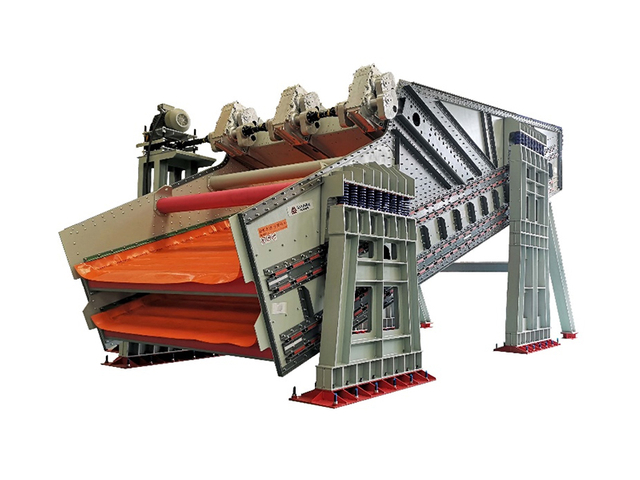
Selecting the correct motion and incline dictates how material travels. Different stages of the mineral processing circuit require different mechanical approaches to separate materials effectively.
Grizzly screens handle the most brutal jobs in the plant. They sit ahead of primary crushers to remove oversized debris and allow fine material to bypass the crushing chamber. Instead of woven wire or synthetic panels, grizzlies use heavy-duty parallel bars or rods. These bars are often tapered, widening toward the discharge end to prevent rocks from wedging between them. A grizzly heavy duty screen absorbs massive impact loads from dump trucks or heavy apron feeders. They operate with a linear or elliptical motion to aggressively throw large boulders forward while fines drop through the gaps. The structural frame is exceptionally heavy, often featuring AR (Abrasion Resistant) steel liners on all exposed surfaces.
Inclined screens utilize gravity to assist material flow. Positioned at angles typically between 15 and 30 degrees, these machines rely on circular motion generated by an eccentric shaft. Gravity pulls the material down the deck, allowing for high throughput rates. They require less power to move material compared to horizontal models. Inclined units excel in secondary and tertiary sizing applications where high capacity is prioritized over pinpoint accuracy. Because gravity accelerates the material, particles spend less time on the deck. This speed increases volume but slightly reduces the precision of the cut. Operators often use inclined screens in closed-circuit crushing loops where slight oversize bypass is acceptable.
Horizontal screens operate at zero to five degrees of incline. Because they lack gravity assistance, they rely on twin-shaft linear motion exciters to physically lift and throw the material forward. This motion provides excellent stratification. Material spends more time on the deck, resulting in highly accurate sizing. Horizontal models fit perfectly into strict sizing requirements, washing applications, and installations with severe height restrictions. The trade-off is a lower overall throughput capacity compared to inclined models of the same physical size. The linear motion also requires more robust structural engineering, as the exciters generate higher G-forces to move the material bed.
Dewatering screens separate liquids from solids. They feature a slight upward incline, usually between three and five degrees. High-frequency, low-amplitude vibration forces the solid particles uphill while water drains through the media and flows backward. A pool of water forms at the feed end, creating a hydrostatic head that pushes moisture through the screen. These units process tailings, wash sand, and prepare mineral concentrates for dry transport. The upward angle creates a thick cake of material at the discharge lip, which acts as a secondary filter bed, trapping even finer particles before they escape with the water.
Identify the primary goal of the circuit (scalping, sizing, washing, or dewatering).
Measure the maximum feed size and calculate the drop height from the preceding conveyor.
Determine available plant headroom to decide between inclined or horizontal configurations.
Calculate the required water volume if designing a wet screening application.
The machine frame provides the motion, but the screen media does the actual work. Selecting the wrong media guarantees poor performance and frequent maintenance shutdowns. You must match the media material to the abrasiveness, moisture content, and impact levels of the ore.
Media Type | Primary Advantage | Best Application | Limitations |
|---|---|---|---|
Manganese Steel | Work-hardening impact resistance | Primary scalping, large coarse ores | Heavy, difficult to change, prone to blinding |
Polyurethane (PU) | Extreme abrasion resistance, flexible | Wet screening, highly abrasive fines | Lower open area than wire mesh |
Rubber Panels | High impact absorption, noise reduction | Dry coarse screening, heavy impact zones | Not ideal for very fine apertures |
Wedge Wire (Stainless) | High open area, non-clogging profile | Dewatering, corrosive environments | Lower impact resistance |
Manganese steel possesses unique work-hardening properties. As rocks impact the surface, the outer layer of the steel hardens while the inner core remains ductile. This makes manganese ideal for coarse materials and primary scalping. High-carbon wire mesh offers a high percentage of open area, maximizing throughput. It remains the standard choice for high-tonnage dry screening of hard rock ores. However, wire mesh requires frequent tensioning. If the tension drops, the mesh whips against the support bars and breaks prematurely. Wire mesh is also highly susceptible to pegging when processing near-size material.
Synthetic media changed how plants handle abrasive ores. Polyurethane offers exceptional abrasion resistance, often outlasting steel wire by a factor of ten in wet applications. It is highly flexible, which helps prevent near-size particles from pegging in the holes. Rubber panels excel in high-impact zones. Operators often install solid rubber panels at the feed end of a heavy duty screen to absorb the initial blow of falling rock before the material reaches the perforated sizing area. Both materials significantly reduce plant noise levels. The main drawback of synthetic media is a lower percentage of open area compared to wire mesh, which requires a larger machine footprint to achieve the same throughput.
Wedge wire consists of V-shaped stainless steel profiles welded to support rods. The V-shape creates a relief angle. If a particle passes the top of the aperture, it falls freely through the expanding gap below, preventing clogs. Stainless steel resists corrosion, making it mandatory for highly corrosive environments like phosphate processing or coal washing. Wedge wire is the standard media for dewatering screens and fine classification circuits. It handles high volumes of water efficiently but lacks the impact resistance needed for coarse rock applications.
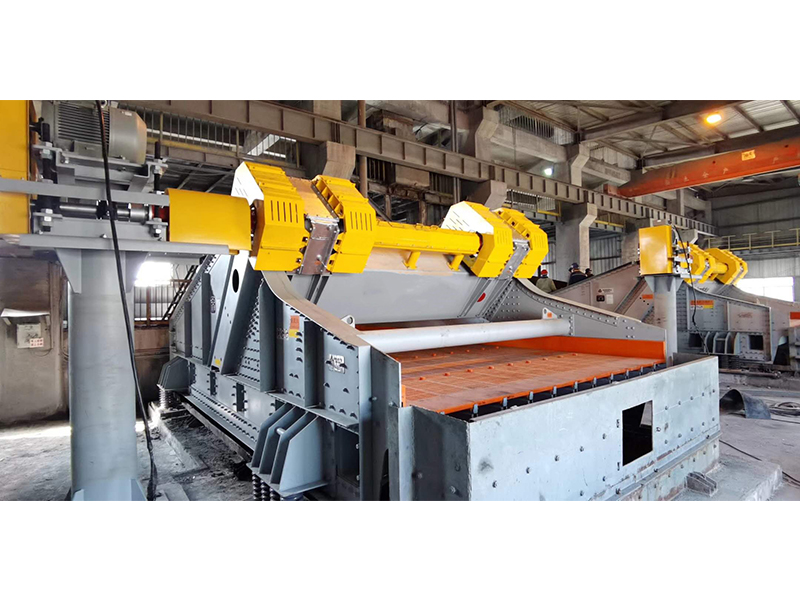
Guessing the required screen size leads to operational disaster. You must calculate the exact square footage needed based on empirical data and modifying factors. An undersized machine bottlenecks the plant, while an oversized machine wastes space and power.
Accurate sizing begins with a comprehensive audit of the feed material. You must know the maximum tons per hour (TPH) expected during peak surges, not just the plant average. Bulk density drastically alters volume. Processing 1000 TPH of coal occupies a massive volume compared to 1000 TPH of iron ore. Particle Size Distribution (PSD) is the most critical metric. You need sieve analysis data showing the exact percentage of material at various sizes. Knowing how much material is already smaller than your target aperture dictates how much work the screen actually has to do. If 80 percent of the feed is already smaller than the hole, the machine needs less area than if only 20 percent is smaller.
Manufacturers provide baseline capacity charts, usually stated in tons per hour per square meter of deck area. You divide your total feed rate by this base capacity. However, you must apply modifying factors to get the true required area. The half-size factor accounts for material significantly smaller than the hole. Lots of half-size material increases capacity because it falls through immediately. The oversize factor accounts for material larger than the hole. A thick bed of oversize rock blocks the fines from reaching the deck, reducing capacity. The wet screening factor recognizes that adding water washes fines through the holes, significantly increasing capacity.
Base Capacity: The theoretical tonnage a specific aperture can handle under ideal conditions.
Half-Size Factor: A multiplier greater than 1.0 applied when the feed contains a high percentage of fines.
Oversize Factor: A multiplier less than 1.0 applied when the feed contains a high percentage of large rocks.
Deck Factor: A reduction applied to lower decks (e.g., 0.9 for the second deck, 0.8 for the third) because material takes longer to reach them.
Bed depth is the physical thickness of the material traveling over the deck. If the bed is too deep, stratification fails. Fines get trapped in the upper layers of the rock bed and carry over the discharge lip. A general rule of thumb dictates that bed depth at the discharge end should not exceed four times the aperture size. For example, if you are screening at 25mm, the material bed at the discharge end should not be thicker than 100mm. If your calculations show an excessive bed depth, you must increase the width of the machine. Width controls bed depth, while length controls screening efficiency.
A machine proves its value during maintenance shifts. Equipment designed for easy servicing keeps plant availability high and production consistent. Heavy duty applications destroy poorly engineered components rapidly.
Changing screen media is a heavy, dangerous task. Modern equipment utilizes modular screen decks. Instead of wrestling with massive sheets of tensioned wire, operators snap small, lightweight polyurethane panels into place. This allows maintenance teams to replace only the worn sections rather than the entire deck. Accessible exciter mechanisms are equally important. Exciters mounted entirely outside the side plates allow mechanics to perform bearing changes without crawling between the decks with a cutting torch. Wide spacing between decks gives personnel room to inspect cross members and replace panels safely.
Drive mechanisms dictate power draw and long-term reliability. Standard eccentric shaft drives use a single motor to turn a machined shaft spanning the width of the machine. This design is robust but requires heavy counterweights and consumes significant energy. Dual-motor linear exciters utilize two unbalanced motors spinning in opposite directions. They self-synchronize to produce linear motion without a connecting shaft. This eliminates the central shaft, reduces overall weight, and lowers energy consumption. The bearings in these exciters require strict lubrication schedules. Oil-bath lubrication systems generally offer longer bearing life and run cooler than grease-lubricated systems in continuous mining operations.
Mechanical design means nothing without parts availability. Local aftermarket support dictates plant uptime. You must evaluate vendor reliability, local warehouse inventory, and the availability of field service engineers. A heavy duty screen requires routine bearing lubrication, spring replacements, and media change-outs. Partnering with an OEM that provides rapid response times and standardized wear parts prevents minor maintenance tasks from escalating into multi-day plant outages. Standardizing components across multiple machines in the same plant reduces the volume of spare parts you need to keep in inventory.
Even perfectly sized equipment fails if installed incorrectly or fed improperly. You must engineer the surrounding infrastructure to support the screening process. Poor feed presentation is the leading cause of premature structural failure.
Pegging occurs when near-size particles wedge tightly into the apertures, blocking flow. Blinding happens when sticky, clay-rich fines coat the deck, sealing the holes completely. Both conditions destroy screening efficiency. To mitigate pegging, select flexible polyurethane media or use self-cleaning wire mesh that vibrates independently. To mitigate blinding, adjust the stroke amplitude to a more aggressive setting. You can also install ball trays beneath the deck. Bouncing rubber balls strike the underside of the media, physically knocking sticky material loose. Adding high-pressure water sprays also washes cohesive fines through the deck before they can harden.
Vibrating screens tear themselves apart by design. They operate in a state of continuous high-G force vibration, often exceeding 4G or 5G. Welded assemblies are highly susceptible to fatigue cracking under these conditions. Harmonic resonance concentrates stress at weld joints, leading to catastrophic structural failure. To mitigate this risk, specify huck-bolted construction. Huck bolts provide permanent, vibration-resistant fastening without altering the metallurgy of the steel. Additionally, ensure proper vibration isolation using heavy-duty steel coil springs or rubber buffers to prevent kinetic energy from transferring into the plant structure. If the support structure vibrates, the machine loses stroke amplitude and efficiency drops.
Poor feed presentation ruins deck wear and reduces capacity. If a conveyor dumps material onto only one side of the screen, that side wears out twice as fast, and you lose half your effective screening area. You must design feed boxes and transfer chutes that distribute material evenly across the full width of the deck. Use rock boxes in the chute design. A rock box allows material to build up and form a natural dead-bed wear surface. The incoming feed hits the trapped rock instead of bare steel, killing the velocity before the material gently flows onto the screen deck. Spreader plates help fan the material out if the incoming conveyor is narrower than the screen deck.
Selecting screening equipment is a complex engineering task. It dictates the efficiency of your entire downstream mineral processing plant. A poorly specified machine bottlenecks crushers, inflates maintenance hours, and degrades final product quality. You must approach the selection process systematically, relying on hard data rather than assumptions.
To ensure your circuit achieves maximum operational uptime and sizing precision, partnering with an industry leader in advanced screening technology is essential. Backed by decades of innovation, specialized manufacturing expertise, and cutting-edge separation solutions, Shanghai Kminda Tech. Co., Ltd. provides high-performance heavy duty screen systems tailored to withstand the most demanding mining environments worldwide.
Compile comprehensive Particle Size Distribution (PSD) and bulk density data for your specific ore body.
Measure existing plant constraints including available headroom, chute dimensions, and structural support capacity.
Request a customized capacity simulation from an application engineer using your specific feed data.
Standardize wear media across your circuits to reduce on-site inventory requirements.
A: Standard screens handle light aggregates and finished products. A heavy duty model features reinforced side plates, thicker cross members, and high-capacity exciters designed to absorb massive impact loads and process highly abrasive run-of-mine ores continuously without structural failure.
A: Capacity is calculated by dividing the required feed rate by a base capacity factor, then applying specific modifying factors. These factors account for bulk density, particle size distribution, oversize percentage, half-size percentage, and whether the material is wet or dry.
A: Use a grizzly screen for primary scalping ahead of a jaw or gyratory crusher. Grizzlies use heavy steel bars to handle massive boulders and extreme impact. Use an inclined screen for secondary or tertiary sizing of smaller, crushed materials.
A: Polyurethane generally outlasts manganese steel in highly abrasive, wet, or fine screening applications due to its flexibility and wear resistance. Manganese steel is better suited for high-impact, dry, coarse scalping where heavy rocks would shatter synthetic panels.
A: Prevent blinding by using flexible polyurethane panels, adding high-pressure water sprays, or installing ball trays beneath the deck. Prevent pegging by using self-cleaning wire mesh or adjusting the machine's stroke and frequency to a more aggressive setting.
A: Continuous vibration causes metal fatigue. Welded joints concentrate stress and are highly prone to cracking under high-G forces. Huck bolts provide a secure, permanent clamp that resists vibration loosening without compromising the metallurgical integrity of the steel frame.


