

close
Choose Your Site
Global
Social Media
Views: 0 Author: Site Editor Publish Time: 2026-04-21 Origin: Site


Wear resistance and hardness are two crucial properties that determine the performance of rubber panels in industrial applications. Wear resistance refers to a rubber panel's ability to withstand friction, abrasion, and other forms of mechanical stress, ensuring its durability and longevity in harsh environments. On the other hand, hardness measures the material's resistance to indentation or surface deformation, which is vital for applications where the rubber is exposed to impact or pressure. While both properties play an important role in the performance of rubber panels, they are distinct. Wear resistance focuses on the material's ability to resist degradation over time, while hardness is more about surface durability. Understanding the differences between these two properties is essential for selecting the right rubber panel for specific industrial needs, such as in mining, construction, and automotive manufacturing, where both wear resistance and hardness are often required for optimal performance.
Wear resistance refers to a material's ability to withstand wear, abrasion, and degradation caused by mechanical stress, friction, and exposure to harsh conditions over time. In industrial applications, rubber panels and components are often subjected to continuous friction, impact, and extreme environments, which can lead to material breakdown if not properly designed. Wear resistance ensures that the material maintains its integrity and functionality, reducing the need for frequent replacements and minimizing downtime.
Wear resistance is typically measured using several standard testing methods:
Abrasion Tests:
These tests simulate the effects of wear due to friction and mechanical stress. The Taber Abrasion Test and Rotary Abrasion Test are commonly used to measure how well a material resists surface wear under continuous rubbing or grinding.
Tensile Strength Tests:
Tensile strength is the maximum stress a material can withstand without breaking. This test can provide insight into wear resistance, as stronger materials typically exhibit better performance under constant friction or mechanical stress.
Fatigue Tests:
Fatigue tests measure how a material performs under repetitive stress or loading. These tests are particularly useful for assessing materials subjected to cyclic loading, such as those found in machinery with continuous motion, to determine how long the material can last before it begins to fail due to fatigue.
Impact Resistance Tests:
These tests assess how well a material can withstand impact forces, which are common in many industrial applications. Impact resistance is an important factor in determining the overall wear resistance, especially in environments with high shock loading, such as construction sites or mining operations.
Chemical Resistance Tests:
In addition to physical stress, materials may also degrade when exposed to chemicals. Testing a material’s chemical resistance can provide insight into its durability when exposed to oils, acids, or solvents, further enhancing its wear resistance in specific environments.
Hardness is a material's ability to resist indentation or deformation under a force. It plays a critical role in determining how well a material withstands surface damage, such as scratches, wear, and deformation. Hardness is particularly important in applications where materials experience frequent impact or pressure, like automotive parts or industrial machinery.
Different tests are used to measure a material’s resistance to indentation and surface damage, each suited to specific materials and applications.
The Shore hardness test is used for rubber and elastomers. A durometer with a pointed indenter measures the depth of indentation. Results are given in Shore units:
· Shore A for softer materials like rubber.
· Shore D for harder materials such as rigid plastics.
This test helps determine how well rubber materials resist indentation in flexible applications.
The Rockwell hardness test measures the depth of indentation made by an indenter under a fixed load, commonly used for metals. It uses different scales:
· Rockwell B for softer metals.
· Rockwell C for harder materials like steel.
This test is useful for measuring hardness in rigid or high-stiffness materials.
The Vickers hardness test uses a diamond pyramid indenter to measure the size of the indentation, often used for metals and ceramics. This test is ideal for small-scale measurements and research applications.
Hardness tests help assess how materials resist surface damage in real-world conditions. For example, rubber panels in vibrating machinery or tires need sufficient hardness to resist wear while maintaining flexibility. Proper hardness testing ensures optimal performance, durability, and material selection for industrial applications.
Property | Wear Resistance | Hardness |
Definition | Ability to withstand wear, abrasion, and stress | Ability to resist indentation or deformation |
Measurement | Abrasion, tensile strength, fatigue testing | Shore hardness, Rockwell hardness |
Application | Ideal for long-term durability and performance | Ideal for determining material’s resistance to surface damage |
Effect on Material | Impacts material longevity and resistance to breakdown | Impacts resistance to surface deformation, not directly related to wear |
Influencing Factors | Material composition, environmental conditions | Material stiffness, surface treatment |
· Wear Resistance is more focused on how well a material can endure abrasion and stress over time, ensuring it doesn’t degrade quickly in high-friction environments. It's commonly measured through abrasion tests and tensile strength testing to determine how materials perform under continuous use and harsh conditions.
· Hardness, on the other hand, refers to a material's ability to resist indentation or surface deformation when a force is applied. It is commonly tested through Shore hardness and Rockwell hardness methods. While hardness gives valuable insight into a material's surface durability, it doesn't directly correlate to how it performs under long-term wear.
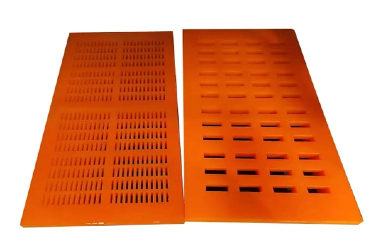
While hardness and wear resistance are related, hardness is not the sole determinant of a material’s ability to withstand wear. Hardness contributes to a material’s resistance to surface deformation, but wear resistance involves a broader set of factors that determine how well a material holds up under friction, abrasion, and continuous mechanical stress.
Hardness helps a material resist surface indentation and deformation under pressure, which can contribute to wear resistance by preventing surface damage from occurring. In many cases, harder materials are more resistant to surface wear since they are less likely to undergo visible changes like scratches or indentations. For example, hard rubber may perform better than softer rubber in applications where the surface is exposed to repeated impacts or friction.
However, hardness alone does not guarantee high wear resistance. Wear resistance also depends on other factors such as the material’s elasticity, composition, and ability to withstand fatigue from repeated motion. A material that is too hard may actually be more prone to brittleness, making it more likely to crack or fail under impact rather than flexing and absorbing the stress.
High Hardness, Low Wear Resistance (Example: Brittle Materials)
Ceramics and brittle plastics are often hard but have low wear resistance in certain applications. While they may resist indentation effectively, they are prone to cracking or chipping under repeated stress or impact, resulting in rapid wear in environments like mining or material handling where there is constant friction and impact.
Low Hardness, High Wear Resistance (Example: Flexible Rubbers)
Some materials, like soft rubber or polyurethane, may have lower hardness compared to harder materials but can still exhibit excellent wear resistance. These materials can absorb impacts and dissipate energy from friction or abrasion, making them ideal for applications like vibration dampening or conveyor belts where flexibility and durability are required over hardness.
Not necessarily. While hardness contributes to wear resistance, rubber with high hardness may still wear out faster under continuous friction.
Shore hardness measures the rubber's resistance to indentation. While harder rubbers may resist surface deformation, they might not always resist wear under heavy use.
It depends on the application. For environments with constant friction, wear resistance is more important, while hardness is vital when resistance to surface damage is required.
Yes, using specific rubber compounds and additives can enhance wear resistance without increasing hardness, improving overall performance in high-wear environments.
In conclusion, wear resistance and hardness are distinct but interconnected properties that play a crucial role in the performance of rubber panels. Wear resistance refers to a material’s ability to withstand long-term friction, abrasion, and mechanical stress, ensuring durability and longevity under harsh conditions. Hardness, on the other hand, measures a material’s resistance to indentation or surface deformation, which contributes to surface durability but does not necessarily indicate how well the material will perform under continuous wear. Understanding the differences between these properties is essential for selecting the right rubber panels for specific industrial applications. At Shanghai Kminda Tech. Co., Ltd., we recognize the importance of both wear resistance and hardness in ensuring that our rubber panels meet the demanding needs of industries like mining, construction, and automotive. By carefully selecting materials that balance these properties, we provide solutions that enhance machinery longevity, reduce maintenance costs, and ensure optimal performance.
