

close
Choose Your Site
Global
Social Media
Views: 0 Author: Site Editor Publish Time: 2026-09-09 Origin: Site


Processing high-tonnage, moisture-laden, and grainy bulk materials creates severe bottlenecks in mineral processing. Traditional inclined or horizontal screens fail under these demanding conditions. They experience rapid blinding, severe pegging, and drastically reduced throughput. Inefficient wet screening causes excessive bed depth at the feed end. This thick material layer prevents proper stratification. Downstream processing inefficiencies then multiply across mining, aggregate, and industrial operations. Plant operators face significant hurdles when standard equipment cannot separate solids and liquids fast enough.
To resolve these specific challenges, engineers implement the heavy-duty wet banana screen. This multi-slope equipment fundamentally changes material flow dynamics. Its variable-slope geometry accelerates material travel velocities right at the feed point. Rapid initial acceleration optimizes bed depth immediately. This ensures fine particles reach the screening surface faster. Industrial plants rely on this specialized technology to maximize continuous duty operations and eliminate stubborn production bottlenecks.
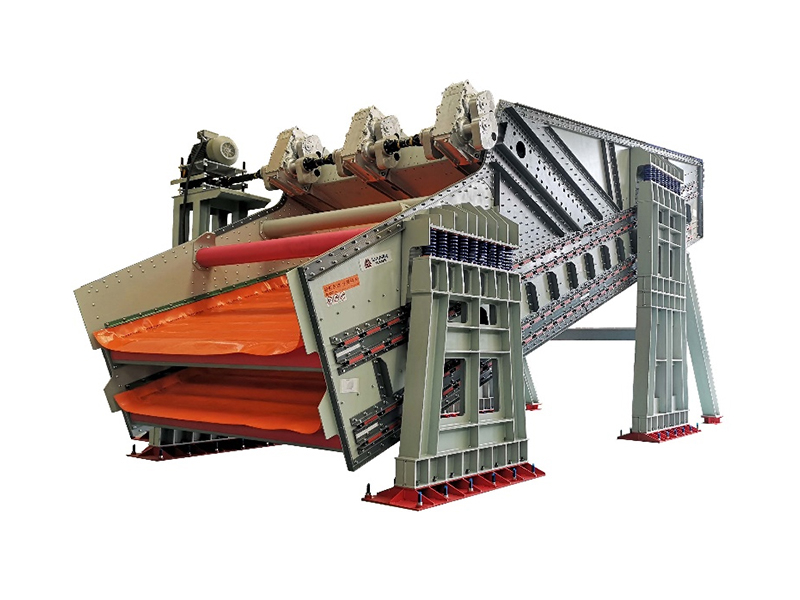
Multi-Slope Efficiency: The steep feed angle of a wet banana screen rapidly accelerates wet, sticky materials, instantly thinning the bed depth and allowing fine particles and water to stratify quickly.
Application Versatility: Highly effective for aggregate washing, mineral classification, dewatering, and waste processing applications where high water-to-solids ratios overwhelm standard screening equipment.
Deck Configuration Matters: Selecting between single and double deck banana screens depends heavily on the required cut sizes, feed distribution, and specific material flow characteristics.
Structural and Dynamic Considerations: The high-G forces and dynamic loads generated by heavy-duty exciters require robust structural engineering and careful selection of screen media to mitigate rapid wear in wet environments.
Table of Contents
Achieving rapid stratification of solids and liquids stands as the primary goal of wet screening. Operators must separate these phases without sacrificing retention time for near-size particles. Standard screens struggle because wet material clumps together, forming a thick, impenetrable mat. The multi-slope design solves this through applied physics. It manipulates gravity and linear vibration to force immediate material separation. Understanding these physical dynamics helps operators optimize their screening circuits and maximize throughput.
The mechanics of the steep initial slope drive the entire screening process. This first section typically sits at a 30° to 34° downward angle. Gravity combines with high-energy vibration to pull material forward rapidly. High material travel velocities prevent the accumulation of wet, sticky materials. Grainy bulk goods spread out instantly upon hitting the deck. This immediate spreading action thins the material bed from a thick, sluggish mass into a fast-moving, shallow layer.
A thin bed depth directly correlates to higher screening efficiency. Feed velocity dictates how quickly fines present themselves to the screen media. When the bed remains thick, fines stay trapped in the upper layers, carrying over the discharge lip as misplaced material. The steep feed angle breaks material surface tension. Water and undersize particles immediately flush through the open area. This leaves only the larger, oversized material to travel down the deck.
To visualize the impact of slope angles on material behavior, consider the following operational phases across the deck:
Deck Section | Typical Angle | Material Velocity | Primary Screening Function |
|---|---|---|---|
Feed End (Section 1) | 30° - 34° | Very High (3.0 - 4.0 m/s) | Rapid bed thinning, bulk water removal, and immediate fines extraction. |
Middle Deck (Section 2) | 15° - 20° | Medium (1.5 - 2.5 m/s) | Stratification of remaining fines, secondary washing, and near-size separation. |
Discharge End (Section 3) | 0° - 10° | Low (0.5 - 1.0 m/s) | Maximum retention time for difficult near-size particles and final dewatering. |
Material behavior changes drastically as it moves past the initial steep section. The screen deck gradually transitions to a shallower discharge end. This final section often flattens out to a 0° to 10° angle. Decreased slope angles naturally slow the material travel velocity. Slower movement increases the overall retention time on the deck, which is necessary for the final stages of classification.
Increased retention time allows for precise separation of near-size particles. These particles require more time to find an aperture and pass through. If the material moves too fast across the entire deck, near-size particles bounce over the holes. The flattened discharge end also facilitates final moisture removal. Water drains away effectively when material spreads thinly and moves slowly. This dual-action geometry provides high capacity at the feed end and high precision at the discharge end.
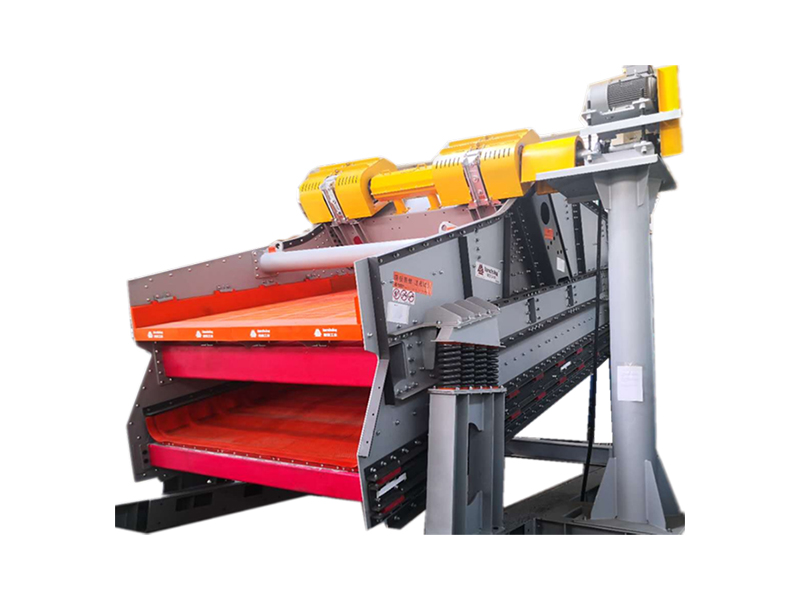
Specific industrial use cases demand specialized screening solutions. Heavy-duty multi-slope screens outperform standard vibrating screens in numerous continuous duty operations. They handle high tonnages and difficult material characteristics effortlessly. Engineers map this equipment to applications requiring aggressive stratification and high water volumes, ensuring plant targets are met without constant equipment blockages.
Quarries utilize these screens extensively for aggregate washing. They excel at removing clay, silt, and slimes from crushed stone and sand. High-velocity material movement breaks apart stubborn clay agglomerations. Water flushes the liberated fines through the deck. This produces a clean, high-quality final aggregate product that meets strict construction specifications.
Integration with overhead spray bars enhances particle cleanliness significantly. Spray bars apply high-pressure water directly onto the moving material bed. The variable slope ensures water penetrates the entire material layer. Operators position spray nozzles strategically across the different deck angles. This maximizes washing efficiency while preventing screen media flooding. Proper spray bar setup involves overlapping spray patterns and maintaining water pressure between 30 and 40 PSI.
High-capacity coal preparation plants rely heavily on multi-slope technology. These facilities use them for critical desliming, drain, and rinse applications. The screens handle massive volumes of coal slurry continuously. They separate valuable fine coal from waste water and clay. The robust design withstands the harsh, continuous duty requirements of modern coal processing, where equipment runs 24/7.
Hard rock mining operations also deploy this equipment for wet sizing. Plants processing iron ore, copper, and gold require precise classification prior to milling. Heavy-duty screens handle the highly abrasive nature of these ores. They ensure only correctly sized material enters downstream separation circuits. This prevents mill overloading and optimizes overall mineral recovery rates. In SAG mill discharge circuits, these screens handle massive impact loads and high slurry volumes simultaneously.
Handling cohesive, clay-heavy, or ultra-fine industrial powders presents unique challenges. The combination of high acceleration and wet screening prevents severe blinding. Sticky materials cannot adhere to the screen media under high G-forces. The rapid forward movement constantly scours the deck surface. This self-cleaning action maintains open area and ensures consistent throughput, even when processing the most difficult ores.
Industrial operations frequently experience fluctuating moisture content in their feed. A well-designed multi-slope screen adapts to these changes easily. It transitions seamlessly between wet, sticky, and relatively dry material states. The aggressive stroke and variable geometry keep material flowing regardless of moisture variations. This adaptability prevents sudden plant shutdowns due to plugged chutes or blinded screens.
The recycling industry increasingly adopts multi-slope screening technology. Construction and demolition waste washing circuits use them to separate heavy rubble from dirt and wood. Slag processing facilities utilize their high capacity to classify abrasive steel mill byproducts. Glass recycling plants rely on them to size crushed cullet accurately while washing away labels and organic residue.
Chemical sector applications demand precise cut points for wet chemical powders. Grainy bulk goods in chemical plants often require washing and dewatering simultaneously. The screens provide the necessary chemical resistance when fitted with specialized media. They deliver consistent product sizing while handling aggressive, corrosive slurries safely.
Engineers and procurement teams need a structured framework to assess specific machine features. Evaluating equipment against desired operational outcomes ensures optimal plant performance. Technical specifications directly impact throughput, maintenance intervals, and overall reliability. Careful analysis of these components prevents costly operational mismatches and frequent maintenance shutdowns.
Single-deck models serve specific, straightforward operational needs. They remain ideal for simple desliming processes or single-cut sizing applications. A single deck offers maximum open area and simplifies maintenance routines. Operators can inspect and replace screen media quickly without navigating tight spaces. The structural weight is lower, which reduces the dynamic load transmitted to the supporting building.
Double deck banana screens handle multiple product classifications within a single footprint. They separate material into three distinct product streams simultaneously. However, maintaining the lower deck introduces operational complexities. Changing screen media on the bottom deck requires more downtime and effort. Engineers must ensure adequate spacing between decks—typically 600mm to 800mm—to facilitate safe and efficient maintenance access for fitters.
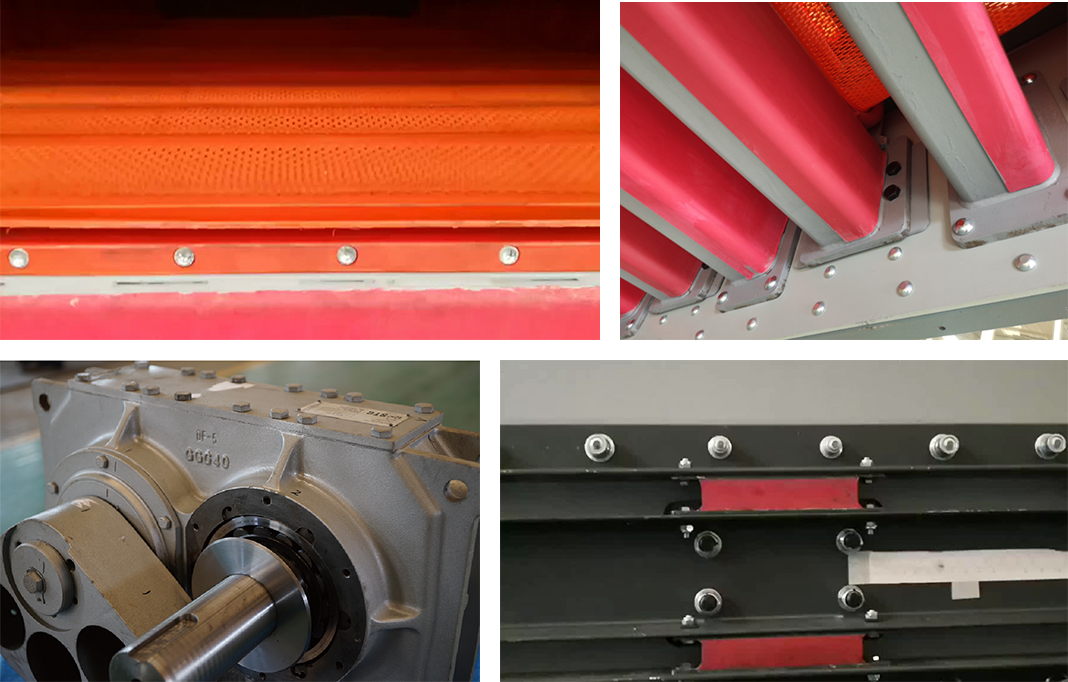
Drive systems dictate the kinetic energy transferred to the material bed. Double unbalance gear units provide exceptional reliability for continuous duty operations. These robust exciters generate massive linear force. Linear motion exciters throw material upward and forward simultaneously. This specific motion profile prevents pegging and maximizes stratification rates. Oil-bath lubricated exciters offer extended bearing life, often exceeding 50,000 hours of continuous operation.
Stroke length, operating frequency, and G-force determine screen efficiency. Heavy, wet applications require high G-forces, typically between 4.5G and 5.2G, to overcome material adhesion. A longer stroke length, ranging from 9mm to 12mm, helps eject near-size particles trapped in the apertures. Operators must tune the operating frequency to match the specific mass and moisture content of the feed. Proper exciter selection ensures the screen maintains optimal dynamics under full load.
Screen media selection drastically impacts classification efficiency and wear life. The wrong media choice leads to rapid wear, constant blinding, and poor product quality. Operators must match the panel material to the specific abrasion and open-area requirements of the application.
Media Type | Best Application | Key Advantages | Limitations |
|---|---|---|---|
Polyurethane Panels | Wet sizing, desliming, washing | High wear resistance, flexible to prevent blinding, corrosion-proof. | Lower open area compared to wire mesh. |
Rubber Panels | Primary feed sections, heavy impact | Superior impact absorption, handles large top sizes, reduces noise. | Thick profile reduces water drainage capacity. |
Wedge Wire (Stainless) | Dewatering, drain and rinse | Maximum open area, precise slot sizes, slices through water efficiently. | Susceptible to damage from heavy, sharp impacts. |
Specifying a multi-slope screen involves weighing various operational trade-offs. Engineers must evaluate how this equipment integrates into existing or planned facilities. Understanding the physical and operational demands ensures successful deployment. Proper integration maximizes the inherent advantages of the variable-slope design while mitigating structural challenges.
Multi-slope technology delivers substantial increases in tons-per-hour capacity. The rapid thinning of the material bed allows more total volume to pass over the deck. This design processes up to 40% more material than a horizontal screen of the exact same width. Plants achieve higher production targets without widening their processing lines or adding parallel screening circuits.
This efficiency translates to a reduced footprint per ton processed. The equipment consolidates screening stages, often replacing two standard screens with one multi-slope unit. Energy consumption per ton processed also decreases. The high-capacity throughput optimizes the power drawn by the heavy-duty exciters. These operational gains streamline the entire mineral processing circuit and reduce the number of transfer points.
The physical size and height requirements of multi-slope screens demand careful plant layout planning. The steep feed angle necessitates a higher feed point compared to flat screens. Chute work must accommodate this elevated entry angle. The overall height profile of the machine impacts overhead clearance, requiring taller buildings and specific crane access routes for maintenance.
Retrofitting a banana screen into an existing plant layout presents specific engineering challenges. Existing steelwork may require significant modification to fit the taller profile. Greenfield installations offer more flexibility to design the supporting structure around the screen's dimensions. Engineers must account for the specific discharge chute trajectories required by the varying deck angles, ensuring material flows smoothly onto downstream conveyors.
Adopting heavy-duty screening technology introduces practical realities and potential failure points. Recognizing these implementation risks allows teams to execute proactive mitigation tactics. Proper planning prevents unexpected downtime and ensures the equipment meets performance expectations from day one.
Overwhelming the screen with excess water creates severe operational risks. Too much water causes media flooding, where slurry rushes over the deck without stratifying. Insufficient water leads to poor stratification and sticky material buildup. Both scenarios ruin classification efficiency and contaminate the final product. Operators aim for a specific slurry density, often targeting 30% to 40% solids by weight.
Operators must establish strict feed presentation controls to mitigate this risk. Properly designed feed boxes distribute the slurry evenly across the entire screen width. This prevents channeling and localized flooding. Technicians must calibrate spray bar water pressure and volume precisely. Continuous monitoring of the incoming water-to-solids ratio ensures the deck operates within its optimal fluid capacity.
Abrasive slurry and high material velocities accelerate wear on critical components. Cross members, side plates, and screen media face constant degradation. Wet continuous duty operations also introduce severe corrosion risks. Unprotected steel deteriorates rapidly when exposed to industrial process water and abrasive fines.
Mitigation requires specifying highly resilient materials during the design phase. To protect the equipment, maintenance and engineering teams execute the following steps:
Install rubber-lined or ceramic-lined feed boxes to absorb initial impact and abrasion.
Apply industrial-grade epoxy or polyurethane coatings to all exposed structural steel.
Fit polyurethane protective sleeves over internal cross pipes and structural beams.
Implement predictive maintenance schedules to replace worn screen panels before they fail.
Conduct weekly visual inspections of side plate liners to ensure slurry is not bypassing the media.
Heavy-duty wet banana screens generate massive dynamic forces during operation. These forces can cause structural fatigue in the supporting plant steelwork. Sympathetic resonance occurs when the screen's operating frequency matches the natural frequency of the building. This leads to violent shaking, structural damage, and catastrophic equipment failure.
Mandating Finite Element Analysis during the design phase mitigates resonance risks. Engineers use this analysis to design stiff, robust support structures that absorb dynamic loads safely. Utilizing heavy-duty isolation mounts, such as rubber buffers or coil springs, prevents vibration transmission. Technicians must conduct comprehensive dynamic structural testing upon installation to verify the structure remains stable under full operational loads.
Audit your current feed conditions to determine the exact moisture content, top size, and tons-per-hour requirements before selecting a screen profile.
Conduct pilot-scale testing with representative slurry samples to verify the required cut sizes and optimal water-to-solids ratio.
Specify exciter sizes and drive mechanisms based on the required G-force to prevent blinding in your specific material.
Design custom feed boxes and discharge chutes that accommodate the steep entry angle and varying discharge trajectories of the multi-slope deck.
Implement a strict predictive maintenance schedule focusing on polyurethane panel wear and isolation spring deflection to ensure continuous duty reliability.
a global leader in high-efficiency screening technology and heavy-duty mineral processing equipment, Shanghai Kminda Tech. Co., Ltd. combines decades of advanced engineering expertise with state-of-the-art manufacturing to deliver robust, high-capacity banana screening solutions engineered for maximum operational uptime and exceptional separation precision in the world's most demanding environments.
A: It is a high-capacity vibrating screen featuring a multi-slope deck. Unlike standard inclined screens with a single flat angle, it starts with a steep slope that gradually flattens out. This variable geometry accelerates material instantly, thinning the bed depth for rapid wet stratification.
A: The steep feed section generates high material travel velocities. Combined with high-G linear motion, this rapid forward movement breaks surface tension and prevents sticky, wet materials from adhering to the screen apertures. The constant scouring action keeps the media open.
A: Double deck configurations are used when operations require multiple product classifications within a single footprint. They are heavily utilized in coal preparation, aggregate washing, and hard rock mining to separate feed into three distinct size fractions simultaneously.
A: Yes. The aggressive linear stroke and variable slope design make it highly adaptable. It transitions seamlessly between wet slurries, sticky transitional phases, and completely dry bulk materials without plugging or requiring mechanical adjustments.
A: The ratio depends on the material's specific gravity, top size, and clay content. Engineers determine the optimal ratio through pilot-scale testing and material flow analysis. Proper feed box design and adjustable spray bars help operators fine-tune the water volume on-site.
A: Polyurethane panels are generally the best choice. They offer exceptional wear resistance against abrasive slurries, resist corrosion from process water, and provide flexibility that helps prevent pegging. Wedge wire is preferred specifically for heavy dewatering sections.


