

close
Choose Your Site
Global
Social Media
Views: 0 Author: Site Editor Publish Time: 2026-04-08 Origin: Site


A Multi Layer Stack Vibrating Fine Screen operates under continuous vibration, repeated material impact, and long production cycles, which means its components are exposed to constant mechanical stress. Over time, screen media, motors, fasteners, bearings, and support structures can all experience wear that directly affects separation performance and equipment stability. If maintenance is delayed, even minor issues such as mesh blockage, loose bolts, or poor lubrication can develop into larger problems such as uneven screening, lower throughput, abnormal vibration, or premature component failure. For this reason, maintenance should be treated as a routine part of production management rather than a reactive repair task. A well-maintained screen can deliver more stable particle separation, better energy efficiency, and longer machine life, which is why companies such as Shanghai Kminda Tech. Co., Ltd. emphasize both equipment quality and long-term service support.
Keeping the screen surface clean is one of the most basic but most important maintenance tasks for a Multi Layer Stack Vibrating Fine Screen because accumulated fine particles, moisture, and sticky materials can blind the apertures and reduce effective open area. When this happens, material cannot pass through the screen efficiently, which lowers screening precision and increases unnecessary recirculation. Operators should inspect the screen media at regular intervals and remove any buildup before it hardens or spreads across multiple decks. Depending on the processed material, cleaning can be done with compressed air, soft brushes, water flushing, or approved cleaning systems, but the method should always match the screen material and operating conditions to avoid damaging the mesh or polyurethane panels.
Lubrication is essential because the vibrating motor, bearings, and drive-related components in a Multi Layer Stack Vibrating Fine Screen operate under high-frequency motion and heavy dynamic load. Without proper lubrication, friction increases quickly, heat builds up, and wear accelerates on critical rotating parts, which can lead to noisy operation, unstable vibration, or unexpected shutdowns. Maintenance personnel should follow a defined lubrication schedule based on operating hours, ambient temperature, and load conditions, and they should always use lubricants that meet the equipment manufacturer’s specifications. Over-lubrication should also be avoided, since excess grease can create additional heat and contamination rather than protection.
The screening deck should be checked frequently because it directly affects classification efficiency and product quality. Operators need to look for worn apertures, torn screen panels, loose fixing elements, uneven tension, and signs of localized damage caused by impact or abrasive feed material. A damaged deck does not always fail immediately, but it often causes gradual efficiency loss, inconsistent particle separation, and higher stress on adjacent components. Replacing worn screen media at the right time helps maintain process stability and prevents small defects from developing into larger operational issues that affect the entire machine.
The vibration system is the core of a Multi Layer Stack Vibrating Fine Screen, so its performance should be monitored carefully to confirm that amplitude, frequency, and motion pattern remain within the intended operating range. If vibration becomes unstable, the screen may suffer from poor stratification, reduced fine-particle separation, and accelerated structural wear. Routine checks should include listening for abnormal noise, observing whether material flow remains even across all layers, and measuring operating parameters where possible. Any sudden change in vibration behavior usually indicates a developing issue such as imbalance, loose components, motor problems, or feed inconsistency, and these signs should be addressed immediately before they affect production output.
The motor and drive system must be inspected regularly because they provide the force that keeps the screen running efficiently under demanding conditions. Maintenance teams should check motor temperature, cable condition, mounting bolts, electrical connections, and overall alignment to ensure the unit operates safely and consistently. If overheating, abnormal noise, or irregular starting behavior appears, the problem may be related to insufficient ventilation, electrical faults, excessive load, or inadequate maintenance. Early detection is important because motor issues often spread to other parts of the machine, affecting vibration quality, increasing energy use, and creating unnecessary downtime.
A preventive maintenance schedule allows operators to detect wear before it becomes a production problem and helps transform maintenance from a reactive activity into a planned management system. Daily inspections can focus on cleanliness, noise, and visible damage, while weekly and monthly checks can cover lubrication, fastener tightening, screen condition, vibration behavior, and electrical systems. This structured approach improves reliability because components are serviced based on risk and usage rather than waiting for a failure to occur. For plants with continuous production demands, preventive inspection planning is one of the most cost-effective ways to protect both screening efficiency and equipment availability.
Operator training is equally important because even a high-quality Multi Layer Stack Vibrating Fine Screen can suffer from poor maintenance outcomes if it is used incorrectly. Skilled operators are more likely to notice early warning signs such as uneven feed distribution, unusual vibration, reduced throughput, or abnormal sound, and they can report these issues before major damage occurs. Training should cover correct startup and shutdown procedures, safe cleaning methods, overload prevention, and the basic interpretation of machine behavior during operation. When operators understand the relationship between process conditions and equipment health, daily maintenance becomes more effective and consistent.
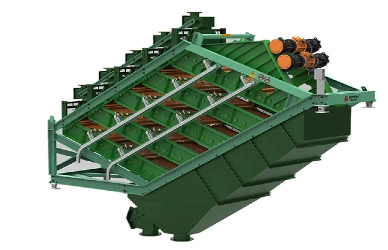
Screen blinding is a common issue in fine screening applications because moist, sticky, or near-size particles can clog apertures and sharply reduce the working area of the screen. To control this problem, operators should evaluate feed moisture, particle distribution, vibration settings, and screen media design rather than relying only on repeated cleaning. In many cases, optimizing feed preparation or selecting more suitable screen media can reduce blinding more effectively than increasing manual maintenance frequency. A rapid response to blinding is important because once screening efficiency drops, the entire separation process becomes less stable and less economical.
Overloading places excessive stress on the screening surface, support structure, and vibration system, which can shorten equipment life and reduce process efficiency. If too much material enters the machine at once, the screen cannot stratify particles effectively, and fine material may fail to pass through the apertures as intended. This leads to poor separation, more wear, and higher energy demand. Maintaining a controlled and even feed rate is therefore a key maintenance-related practice, not just a process control issue, because stable loading protects the mechanical integrity of the screen and supports long-term reliability.
Upgrading worn or outdated components can significantly improve the operating efficiency of a Multi Layer Stack Vibrating Fine Screen, especially in plants with abrasive materials or demanding production targets. Higher-performance screen media, better wear liners, improved motors, and more durable fastening systems can reduce maintenance frequency and improve separation consistency over time. While upgrades may increase short-term cost, they often provide better long-term value by reducing downtime, minimizing replacement intervals, and supporting more stable throughput in continuous industrial operations.
A replacement schedule helps plants manage maintenance proactively by identifying which parts are consumable, which are critical, and which require condition-based monitoring. Instead of waiting for visible failure, operators can replace components such as screen panels, bearings, and seals at planned intervals based on service life and operating intensity. This approach improves spare-parts planning, reduces emergency repairs, and keeps the Multi Layer Stack Vibrating Fine Screen working within its intended performance range.
Component | Main Risk | Recommended Check | Maintenance Goal |
Screen media | Wear, blinding, tearing | Daily visual inspection | Maintain screening accuracy |
Vibrating motor | Overheating, instability | Temperature and noise check | Ensure stable vibration |
Bearings | Friction, heat, premature wear | Lubrication and condition check | Extend service life |
Fasteners and supports | Loosening, structural stress | Weekly tightening inspection | Prevent vibration-related damage |
Feed distribution area | Overloading, uneven wear | Observe material flow | Improve process balance |
Uneven feed distribution causes one side or one deck of the Multi Layer Stack Vibrating Fine Screen to wear faster than the others, which creates imbalance, lowers screening efficiency, and increases stress on the structure and vibration system. Over time, this can lead to more frequent part replacement and unstable machine performance, so maintaining uniform feed is an important part of preventive maintenance.
Yes, keeping essential spare parts in stock is highly recommended because components such as screen panels, fasteners, bearings, and seals may need immediate replacement to avoid long production delays. A planned spare-parts inventory helps reduce downtime and allows maintenance teams to respond quickly when wear or damage is discovered during inspection.
Maintenance records help plants track wear patterns, identify recurring faults, and improve service intervals based on real operating conditions rather than guesswork. For a Multi Layer Stack Vibrating Fine Screen, this information supports better decision-making, reduces unexpected failures, and helps optimize both maintenance cost and equipment life.
Yes, improper shutdown procedures can leave material on the decks, increase moisture buildup, and place unnecessary stress on moving parts, especially if the equipment is stopped under overload conditions. Following the correct shutdown process helps protect the screen surface, reduce cleaning difficulty, and support more reliable restart performance.
Maintaining a Multi Layer Stack Vibrating Fine Screen efficiently requires more than occasional cleaning or emergency repair; it demands a complete strategy that includes routine inspection, proper lubrication, vibration monitoring, overload control, operator training, timely replacement, and accurate recordkeeping. Each of these maintenance actions supports better screening efficiency, more stable operation, and longer equipment life in demanding industrial environments. For companies that rely on precise fine screening, consistent maintenance is not an extra cost but a direct investment in production continuity and equipment value. At Shanghai Kminda Tech. Co., Ltd., understanding these maintenance principles is essential to helping customers achieve reliable performance, lower downtime, and stronger long-term results from their screening systems.
