

close
Choose Your Site
Global
Social Media
Views: 0 Author: Site Editor Publish Time: 2026-04-13 Origin: Site


Wear-resistant rubber panels are crucial components in various industries, including mining, construction, and manufacturing, due to their ability to withstand harsh conditions. These panels are designed to handle high-impact and high-friction environments, making them ideal for use in vibrating screens, conveyor systems, and other machinery that experience constant abrasion. Their durability and resilience reduce the frequency of replacements, lower maintenance costs, and enhance overall operational efficiency. In industries where equipment is subjected to extreme wear and tear, wear-resistant rubber panels provide a reliable and cost-effective solution, ensuring smooth and continuous operations while extending the lifespan of the machinery.
Natural rubber is known for its elasticity and durability. It offers high abrasion resistance and flexibility, making it ideal for environments with constant friction. Its ability to absorb shocks extends the lifespan of machinery and reduces replacement frequency, especially in mining and industrial applications.
Synthetic rubber, including types like:
· SBR (Styrene-Butadiene Rubber): Offers a good balance of wear resistance and affordability.
· NBR (Nitrile Butadiene Rubber): Provides chemical and oil resistance.
· EPDM (Ethylene Propylene Diene Monomer): Resists ozone and weathering.
Synthetic rubbers are more cost-effective than natural rubber and offer tailored wear resistance and chemical resistance for harsh environments.
Polyurethane blends provide exceptional abrasion and impact resistance, making them ideal for high-stress applications like mining and construction. PU blends offer longer lifespan and greater durability, withstanding heavy loads and mechanical stress.
Silicone rubber is used in high-temperature applications, as it can withstand extreme heat. While less durable under abrasion, it is ideal for environments like furnaces or ovens due to its heat resistance and flexibility.
The choice of material significantly influences the flexibility, wear resistance, and overall lifespan of wear-resistant rubber panels. Each material has unique properties that make it suitable for specific applications.
· Natural Rubber is known for its high flexibility, making it ideal for environments where the panel needs to conform to varying surfaces or absorb impacts. This flexibility helps prevent cracking and allows it to adapt to machinery vibrations, increasing durability.
· Synthetic Rubber, on the other hand, can be engineered for specific flexibility levels based on the application. For example, SBR (Styrene-Butadiene Rubber) offers a balance of flexibility and wear resistance, while NBR (Nitrile Butadiene Rubber) might be less flexible but provides excellent chemical resistance.
· Polyurethane (PU) Blends are particularly strong in terms of abrasion resistance. PU panels endure harsh environments where constant friction is present, making them suitable for high-load industrial applications like mining, construction, and material handling.
· Natural Rubber offers good wear resistance, but over time, it might wear down more quickly in extreme conditions compared to synthetic alternatives. However, its resilience is often ideal in environments where high flexibility is needed.
· Synthetic Rubbers like NBR and EPDM have better chemical resistance and can perform well in environments with exposure to oils, acids, or extreme temperatures. This enhances their lifespan compared to natural rubber in specific settings, such as chemical processing industries.
· Polyurethane (PU) has an extended lifespan in high-impact and abrasive conditions, making it the preferred choice for panels exposed to constant heavy use.
· Synthetic Rubber is ideal for applications requiring specific wear resistance (e.g., exposure to oils, chemicals, or extreme temperatures), such as in the automotive or chemical industries.
· Natural Rubber works better in environments where flexibility and shock absorption are more critical, such as in vibrating machinery used in mining, where panels need to withstand varying pressures and impacts without cracking.
To further improve the performance of wear-resistant rubber panels, various additives and enhancements are incorporated into the rubber formulation. These substances enhance key properties such as durability, abrasion resistance, and overall strength.
Carbon black is commonly used as a reinforcing agent in rubber manufacturing. It improves UV resistance, preventing the rubber from degrading when exposed to sunlight over time. Additionally, it enhances the durability of the rubber, increasing its ability to withstand wear, environmental stresses, and physical impacts. Carbon black also helps improve the thermal stability of the rubber, ensuring it performs effectively in varying environmental conditions.
Resins and fillers are added to the rubber compound to further enhance its wear resistance and strength. These additives help reinforce the rubber structure, making it more robust under mechanical stress and preventing it from degrading quickly in abrasive environments. Fillers like silica or clay can improve the abrasion resistance of rubber panels, extending their service life and reducing the frequency of replacements.
Vulcanization is a chemical process that involves adding sulfur to rubber, which creates cross-links between polymer chains, resulting in a stronger, more elastic material. This process increases the elasticity, strength, and durability of the rubber, making it more resistant to wear, tearing, and deformation. Vulcanization also improves the panel’s resistance to heat and aging, ensuring it maintains its performance over extended periods of use in harsh conditions.
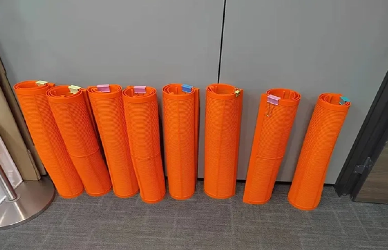
When choosing between rubber and metal for wear-resistant panels, there are several key advantages of rubber in specific applications:
Flexibility:
Rubber panels are significantly more flexible than metal. This flexibility allows rubber to conform to different surfaces and absorb shock and vibrations more effectively, making it ideal for applications that involve movement or fluctuating pressure, such as in mining, material handling, or vibration-based machinery. In contrast, metal panels are rigid and may be prone to cracking or deformation under such dynamic conditions.
Noise Reduction:
Rubber has inherent sound-damping properties that reduce noise levels in machinery and equipment, which is especially valuable in environments where noise reduction is important for safety or comfort, like in manufacturing facilities or construction sites. Metal, being harder and more resonant, does not provide the same level of noise absorption and can contribute to a noisier environment.
Corrosion Resistance:
Rubber is inherently resistant to corrosion from chemicals, moisture, and other environmental factors. On the other hand, metal can corrode or rust over time, especially in humid or acidic environments, requiring additional maintenance and coatings to protect against damage.
Cost:
Rubber is typically more cost-effective than metal, particularly for applications that require flexibility, vibration absorption, and noise reduction. Metal may be more durable in extreme abrasion conditions but often comes with higher material and manufacturing costs.
While both rubber and polyurethane are widely used for wear-resistant panels, they each offer distinct advantages and are better suited for different types of applications:
Cost:
Rubber is generally more cost-effective than polyurethane, especially in bulk. It provides a good balance of wear resistance and flexibility for many industrial applications without the high cost of polyurethane. Polyurethane, while offering superior performance in some areas, tends to be more expensive due to its advanced formulation and the specialized processes involved in its production.
Wear Resistance:
Polyurethane has superior abrasion resistance compared to rubber, making it ideal for applications that involve extreme wear, heavy loads, or high-impact stress. Polyurethane panels can maintain their integrity under more aggressive conditions, such as in mining or heavy construction. In contrast, rubber provides good wear resistance but may wear down faster than polyurethane in these harsher environments.
Performance in Harsh Environments:
Polyurethane performs better in environments with extreme mechanical stress, heavy abrasion, or exposure to harsh chemicals, oils, or temperature fluctuations. It is commonly used in industries where the rubber’s performance might not last long enough, such as in mining, quarrying, or industrial machinery. While rubber is resilient in more flexible applications, it may not stand up as well to extreme conditions in the long term, especially when subjected to chemicals or heavy impact.
Flexibility and Shock Absorption:
Rubber has a significant advantage when it comes to flexibility and shock absorption. Its inherent elasticity allows it to absorb vibrations and impacts, which makes it ideal for equipment that experiences fluctuating pressures or requires noise reduction. Polyurethane, although stronger and more resistant to wear, is generally less flexible than rubber and may not perform as well in applications that require significant movement or vibration absorption.
Natural rubber is more elastic, while synthetic rubber offers specific wear and chemical resistance, making it ideal for different applications.
Polyurethane provides superior abrasion and impact resistance, making it perfect for high-stress environments like mining and construction.
Yes, silicone rubber can withstand extreme temperatures, making it suitable for specialized industrial applications where heat is a concern.
Vulcanization enhances the rubber's elasticity, strength, and overall durability, ensuring the panels last longer in challenging conditions.
The materials used to create wear-resistant rubber panels—such as natural rubber, synthetic rubber, polyurethane blends, and silicone rubber—each offer distinct advantages that enhance the panel's performance in various industrial applications. Natural rubber is valued for its flexibility and abrasion resistance, making it ideal for environments where elasticity and shock absorption are critical. Synthetic rubbers like SBR, NBR, and EPDM provide tailored wear resistance and chemical resistance, making them more suitable for harsh, high-stress environments. Polyurethane blends excel in abrasion and impact resistance, offering superior durability in high-impact applications. Silicone rubber, while less common, is the go-to material for high-temperature environments. When selecting the right material, it’s crucial to consider factors such as the nature of the application, the environmental conditions, and the required durability. Each material plays a key role in ensuring that wear-resistant rubber panels meet the demanding needs of industries like mining, construction, and manufacturing, improving efficiency and extending the lifespan of machinery and equipment. At Shanghai Kminda Tech. Co., Ltd., we are committed to providing high-quality, durable wear-resistant rubber panels that are tailored to meet the unique requirements of our clients' operations.
