

close
Choose Your Site
Global
Social Media
Views: 0 Author: Site Editor Publish Time: 2026-03-11 Origin: Site


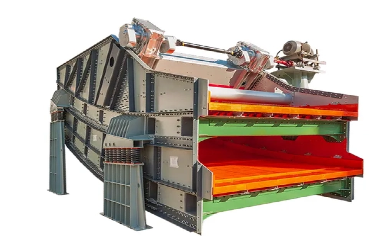
When users search for a Heavy Duty Banana Screen Equal Thickness Sizer Wet Screen, a key question is not only what it is, but where it is mainly used. This matters because wet screening performance depends strongly on application fit. Even a well-designed screen may underperform if it is used for the wrong duty or matched with unsuitable feed conditions or deck/media setup. A heavy-duty banana screen (also called an equal thickness screen) is commonly used for high-throughput wet sizing and classification, because its multi-slope deck design helps manage material bed behavior, improve deck utilization, and support stable screening in demanding wet conditions. It is therefore widely used in coal preparation, mineral processing, and other heavy-duty wet screening operations. However, buyers should not choose by name alone—the right selection depends on material characteristics, process target, and actual plant operating conditions.
A Heavy Duty Banana Screen Equal Thickness Sizer Wet Screen is mainly used as a wet sizing and wet classification solution in continuous industrial processing lines. In wet screening, feed materials often contain water or slurry and may vary in particle size, density, and flow behavior. These conditions place higher demands on screening equipment than many dry screening duties.
The banana/equal-thickness design is useful in these situations because it helps control how material moves across the deck. Instead of relying on a single deck angle, it uses multiple slope sections to influence material velocity and bed thickness as the feed progresses from inlet to discharge. This supports more effective use of the screening surface, especially in high-load wet duties.
This screen type is often associated with high-throughput wet screening because the deck structure is designed to support strong capacity performance while maintaining screening effectiveness. In many wet plants, the screening stage must process large volumes continuously without creating bottlenecks for downstream operations.
Compared with some conventional layouts, a banana screen can provide better capacity per unit area in suitable applications. This is one reason it is commonly used in heavy-duty sizing, grading, and classification stages where throughput and operating continuity are both important.
The equal-thickness principle helps create more favorable screening conditions along the deck by managing material bed depth and flow behavior. In wet screening, where slurry distribution, particle suspension, and feed consistency can affect results, this design can support better deck utilization and more stable separation.
That said, performance still depends on factors such as feed rate, slurry concentration, particle size distribution, and screen media condition. The design supports performance, but it must still be matched to the actual duty.
One of the most common applications is raw coal grading and wet coal sizing in coal preparation plants. These duties often involve high feed volumes and require stable separation into target size fractions before downstream washing, separation, or handling stages.
A heavy-duty banana screen is often selected here because it can support continuous operation and high throughput while improving screening conditions across the deck. In wet coal processing, stable sizing performance helps maintain downstream process efficiency and product consistency.
Another major application is desliming, where fine slimes or unwanted fine fractions are removed before later process stages. Desliming is important in both coal preparation and mineral processing because excessive slimes can reduce the efficiency of downstream separation or recovery operations.
In desliming duties, wet feed behavior can vary significantly, so screen stability and media selection become important. The banana/equal-thickness design can help improve deck utilization and support more consistent wet separation conditions when configured properly for the application.
In coal preparation flowsheets, banana screens are also used in de-medium (de-intermediation) duties, where the goal is to separate product material from dense medium after medium-based separation stages. These duties require reliable wet screening under heavy process loads and often need stable operation to protect downstream equipment and medium circuits.
Because the process is closely linked to overall plant performance, screen selection for de-medium duty must consider not only capacity, but also operating stability, media wear, and integration with the plant’s medium recovery system.
A heavy-duty banana screen can also be used in wet crushing-and-screening circuits in metal mines and aggregate operations, especially where high-volume wet sizing or classification is required. In these circuits, the screen may be part of a larger process sequence involving crushing, washing, classification, and recirculation.
The main advantage in these applications is the ability to combine heavy-duty operation with strong throughput potential. However, final suitability depends on the material’s abrasiveness, particle size range, and the target cut size required by the plant.
Beyond the applications above, this screen type may also be used in other heavy-duty wet classification and sizing duties where plants need a robust screening solution with strong capacity and stable performance. Examples can include non-metal mineral processing or industrial wet screening tasks where feed conditions are demanding and continuous operation is critical.
A key reason buyers choose this screen type is its ability to support large processing capacity while maintaining useful screening performance in wet conditions. In many plants, the screening stage must balance output volume with separation quality. The banana/equal-thickness design helps improve deck use and can support that balance when applied correctly.
Heavy-duty plants often run for long periods, so operating stability matters as much as nominal capacity. A screen that performs well on paper but creates unstable operation, uneven loading, or frequent maintenance interruptions can reduce total plant efficiency. Banana screens are often selected because they are designed for continuous industrial duty in demanding environments.
In some retrofit or expansion projects, floor space is limited. In these cases, buyers may focus on capacity per installation area, not just total machine size. Depending on the model and duty, banana screens may offer layout advantages compared with some conventional vibrating screen configurations.
Application | Main Process Goal | Why This Screen Is Often Used | Key Selection Focus |
Raw coal grading / wet coal sizing | Separate coal into target size fractions | Handles high throughput wet feed; supports stable sizing | Feed rate, cut size, deck/media setup |
Desliming (coal/minerals) | Remove fine slimes before downstream stages | Supports wet separation and deck utilization in variable feed conditions | Slurry condition, aperture, media wear |
De-medium / de-intermediation | Separate product from dense medium | Reliable wet screening in heavy-duty coal prep circuits | Stability, media life, process integration |
Wet crushing-screening circuits | Sizing/classification after crushing/washing | Strong capacity potential in continuous wet circuits | Material abrasiveness, throughput, layout |
Other wet classification/sizing duties | General heavy-duty wet sizing or classification | Robust screening option for demanding wet operations | Material behavior, operating window, maintenance access |
Even though this screen type is used in many wet duties, final suitability depends on material characteristics such as particle size distribution, slurry/moisture condition, abrasiveness, and feed variability. The process target also matters: a setup for wet sizing may not be ideal for desliming or de-medium duty without adjustments.
Screen media selection and deck configuration strongly influence actual performance. Buyers should also consider plant layout, maintenance access, and feed/discharge routing. A technically suitable screen can still be difficult to operate effectively if installation constraints are ignored.
“Banana screen” is a category name, not a full performance guarantee. Final selection should be confirmed using model-specific technical data, recommended operating conditions, and supplier guidance based on the actual process duty.
To get a useful recommendation, provide the supplier with clear information about:
feed material type,
particle size distribution,
feed rate,
slurry/moisture condition,
target product size or separation goal.
The more accurate the input data, the more reliable the recommendation.
Ask the supplier to recommend a deck configuration and screen media setup for your specific wet duty. A screen category alone is not enough; the configuration determines how well it fits your process.
Ask about expected performance under actual operating conditions, not only nominal values. This helps you evaluate whether the selected model is appropriate for continuous production and process variation.
It can be, but suitability depends on the material, screen media choice, and maintenance plan. Abrasive materials may increase media wear, so media type and replacement strategy are important.
They often require different aperture sizes, media types, and deck configurations because the process goals are different. Desliming focuses on removing fine fractions, while wet sizing targets defined size separation.
Sometimes, but only if the duties are compatible and the operating window supports them. In some cases, different duties need different configurations or separate machines for stable performance.
Common signs include unstable screening results, frequent uneven loading, excessive media wear, poor product consistency, and reduced capacity under normal operating conditions.
A Heavy Duty Banana Screen Equal Thickness Sizer Wet Screen is mainly used in wet screening applications such as raw coal grading, wet coal sizing, desliming, de-medium duties, and heavy-duty wet classification/sizing circuits in coal, mineral, and related industries. It is often chosen because its banana/equal-thickness design supports high throughput and stable wet screening performance in suitable applications. However, the best results come from matching the screen to the actual material, process target, and plant conditions—not from the product name alone.
