

close
Choose Your Site
Global
Social Media
Views: 0 Author: Site Editor Publish Time: 2026-03-09 Origin: Site


In industrial screening, especially in wet classification and sizing, the same equipment may appear under two names: Banana Screen and Equal Thickness Screen. This often confuses buyers, engineers, and operators comparing equipment for coal preparation, mineral processing, and other heavy-duty wet screening duties. In most cases, the two terms refer to the same screen type, but each highlights a different aspect of the machine. Banana Screen emphasizes the deck shape and structural layout, while Equal Thickness Screen emphasizes the screening principle behind its performance. When discussing a Heavy Duty Banana Screen Equal Thickness Sizer Wet Screen, understanding both terms helps explain not only what the equipment looks like, but also why it is designed that way and how it supports wet screening efficiency. For SEO and equipment selection, clearly linking these names is also useful because many buyers searching one term are actually looking for the same machine category.
A Banana Screen is named after the visual shape created by its multi-slope deck design. Instead of one constant deck angle from feed end to discharge end, the screen uses multiple deck sections with different inclinations. When viewed from the side, this staged slope arrangement creates a profile that resembles the curved shape of a banana.
This does not mean the screen is literally curved in a smooth arc. In many designs, the “banana” shape is formed by several straight deck segments connected in sequence. The key feature is the change in angle along the screening path, not a decorative shape. This structural layout is used for a practical reason: it helps manage material flow behavior across the screen surface.
In a Heavy Duty Banana Screen Equal Thickness Sizer Wet Screen, the multi-slope deck structure is especially valuable because wet feed can be dense, variable, and difficult to screen efficiently if material bed depth is not controlled. Heavy-duty applications also require equipment that can handle high loads and continuous operation.
The banana-style deck supports better use of screening area by changing material velocity along the deck. At the feed end, where material loading is highest, a steeper section can help move material quickly and prevent excessive bed buildup. As the material progresses, angle changes help create more favorable screening conditions for the remaining particles. This is one reason banana screens are often associated with high throughput and efficient wet sizing performance.
The term Equal Thickness Screen describes the screening principle behind the banana screen design. In screening theory, “equal thickness” refers to the idea of controlling material bed thickness on the screen deck so that screening conditions remain more effective along different deck sections.
In real operation, material entering the feed end is usually thickly loaded. If the screen used only one angle and one flow pattern, the feed end could remain overloaded while later deck sections become underutilized. The equal-thickness principle aims to reduce this imbalance by using staged deck angles to influence material speed and bed depth as the material moves forward.
In a multi-slope design, the deck angle is adjusted section by section to influence how quickly material travels and how thick the material layer remains. The goal is not to create perfectly identical thickness at every point in a strict mathematical sense, but to create a more favorable and more controlled material bed profile across the deck.
This improves screening conditions because the screen surface can be used more efficiently. In wet screening applications, where slurry behavior and fine particles can affect separation performance, this principle helps support more stable sizing and classification results. That is why many suppliers, engineers, and plant operators use the term Equal Thickness Screen when discussing banana screen designs.
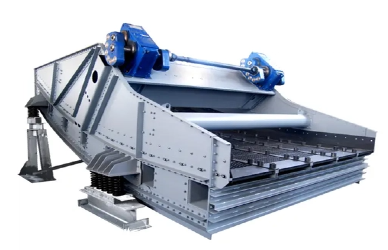
The reason a banana screen is also called an equal thickness screen is simple: the two names describe the same machine from two different perspectives.
Banana Screen = focuses on the shape and deck structure
Equal Thickness Screen = focuses on the screening principle and material bed control
This dual naming is common in industrial equipment. One term may be more popular in product catalogs and sales discussions, while another may be used more often in technical explanations, engineering communication, or process design documents.
Different suppliers may prefer different naming styles depending on their target audience. A catalog may use “Banana Screen” because it is widely recognized in the industry, while a technical document may use “Equal Thickness Screen” to explain why the machine performs well in high-throughput wet screening applications.
That is why a combined term such as Heavy Duty Banana Screen Equal Thickness Sizer Wet Screen appears in product descriptions. It combines:
the structural identity (banana screen),
the principle (equal thickness),
the process role (sizer),
and the operating condition (wet screen).
For buyers, this combined naming can actually be helpful because it provides multiple layers of information in one description.
One of the main benefits of the equal-thickness principle is improved material bed management from feed end to discharge end. In heavy-duty wet screening, feed conditions can create thick loading at the inlet. The multi-slope deck helps reduce excessive buildup and supports more balanced use of the screening surface.
When the material bed is better controlled, particles have more consistent opportunities to contact the screen apertures. This can improve screening effectiveness and reduce the risk of certain deck sections doing most of the work while others remain underused.
Banana/equal-thickness screens are often selected in applications where both throughput and screening efficiency are important. Because the deck layout supports improved use of available screen area, these screens can be effective in heavy-duty wet sizing duties, especially where plants need strong capacity performance.
However, actual performance still depends on factors such as feed rate, particle size distribution, moisture/slurry condition, screen media selection, and machine configuration. The equal-thickness principle supports performance, but it does not replace proper process design and operating control.
In wet screening environments, consistent material movement and stable screening behavior are essential. The equal-thickness approach helps create more favorable conditions for wet classification, desliming, and related sizing tasks. This is why the Heavy Duty Banana Screen Equal Thickness Sizer Wet Screen is often discussed in coal and mineral processing contexts, where wet feed handling and separation reliability are major concerns.
Not every screen labeled “banana” will be identical in deck arrangement, slope sections, or process suitability. Buyers should confirm the actual deck structure, intended duty (wet or dry), and target screening application. The name alone is not enough.
Before making a selection, ask suppliers about:
deck sections and angle design,
screen media options,
intended feed condition range,
wet screening suitability,
installation and maintenance requirements.
This helps ensure the selected model matches your real process goals rather than only matching a keyword or general equipment category.
No, it varies by design and application. The number of slope sections can differ depending on throughput needs, material behavior, and screening goals.
Often yes, but usage varies by supplier. “Banana screen” commonly describes the shape, while “equal thickness screen” is frequently used to explain the screening principle.
Ask for the deck slope layout, section angles, process application details, and technical explanation of how the design controls material bed behavior along the deck.
Yes, it can still help, but performance depends on the level of fluctuation. Strong feed control, proper screen media, and correct operation are still important for stable results.
A Banana Screen is also called an Equal Thickness Screen because the two names describe the same equipment from different angles: one highlights the multi-slope deck shape, and the other explains the screening principle used to improve material bed behavior and deck utilization. For a Heavy Duty Banana Screen Equal Thickness Sizer Wet Screen, this dual naming is especially useful because it connects structural design with wet screening performance. When selecting equipment, buyers should understand both terms and evaluate the screen based on actual process conditions, not terminology alone.
