

close
Choose Your Site
Global
Social Media
Views: 0 Author: Site Editor Publish Time: 2026-08-21 Origin: Site


Plant operators and process engineers often use different names for the exact same equipment. Walk onto any aggregate or mining plant floor, and you will hear crews talk about the banana screen. Read the technical manuals, and you will see it designated as a linear equal-thickness vibrating screen. High-tonnage operations face a massive bottleneck when processing raw feed. Traditional flat or single-incline screens struggle with varying material bed depths. A thick bed at the feed end traps fine particles, preventing proper stratification. A thin bed at the discharge end wastes valuable deck space. This leads to poor separation, reduced throughput, and localized wear. The variable-slope design solves this directly using Boerstrein's principle. By utilizing multiple deck angles, the equipment maintains constant material velocity and a uniform bed depth. This engineering approach maximizes screening efficiency per square meter, allowing plants to handle massive surges in feed rate without choking the circuit.
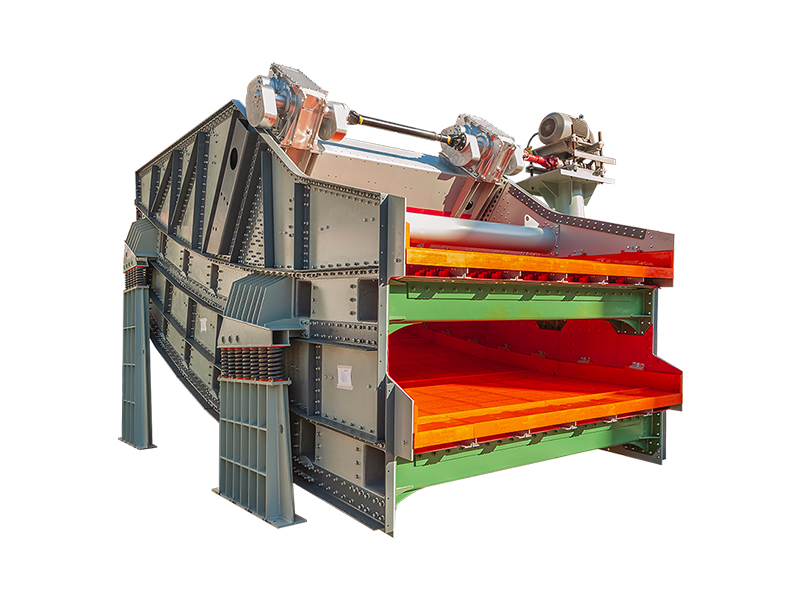
The term "banana screen" refers to the multi-sloped, curved side profile of the screen box, while "equal thickness screen" describes the consistent material bed depth achieved across the screening surface.
By utilizing a steep angle at the feed end that gradually flattens toward the discharge end, the design accelerates fine materials for rapid initial separation.
This design yields up to 30-40% higher capacity than standard vibrating screens of the same footprint, making it ideal for high-tonnage operations.
Evaluating a banana screen requires assessing plant structural capacity, as the high dynamic loads, linear vibration requirements, and larger footprint demand robust infrastructure.
Table of Contents
The physical construction of this equipment immediately explains its common name. The machine features a continuous screening surface divided into multiple deck sections. Manufacturers build these machines with three to six distinct sections. Each subsequent section features a decreasing angle of inclination. Engineers fabricate the heavy-duty side plates to accommodate these specific angle changes, creating a distinct curved profile.
The feed end starts with a steep angle, typically between 34° and 45°. As the deck progresses forward, the angle flattens through transition zones—often dropping to 24°, then 15°. The final discharge end sits nearly flat, between 0° and 5°. When you view the side plates of the screen box from the plant walkway, this multi-sloped configuration mimics the curve of a bunch of bananas. Plant personnel adopted this visual shorthand decades ago to differentiate it from standard horizontal units.
This distinct profile serves a strictly functional purpose. Engineers designed the curve to manipulate the gravitational pull and velocity of the feed material. Every angle change represents a calculated transition point designed to alter how the rock interacts with the screen apertures. The steep sections handle bulk volume, while the flat sections handle precision sizing.
French engineer Boerstrein proposed the principle of equal-thickness screening to solve the fundamental flaw of flat decks. On a standard horizontal or single-incline screen, the material bed thins out drastically as undersize particles fall through the apertures. You start with a massive 300mm pile at the feed end and end up with a sparse 20mm scattering of rocks at the discharge end. This uneven distribution wastes energy and deck space.
An equal thickness screen reverses this dynamic. The decreasing slope physically slows the material down as it travels forward. At the feed end, gravity accelerates the mass. At the discharge end, the flat deck acts as a brake. The reduction in total material volume—caused by undersize particles successfully passing through the screen—is perfectly offset by the reduction in material velocity.
This physical balancing act results in a constant, thin bed depth from the feed chute all the way to the discharge lip. Process engineers use the full technical terminology: linear equal-thickness vibrating screen. Linear motion is an absolute requirement for this principle to work. The drive mechanism must propel the material forward across the flattening discharge sections where gravity no longer assists the flow. Without strong linear stroke action, the material stalls and plugs the discharge end.
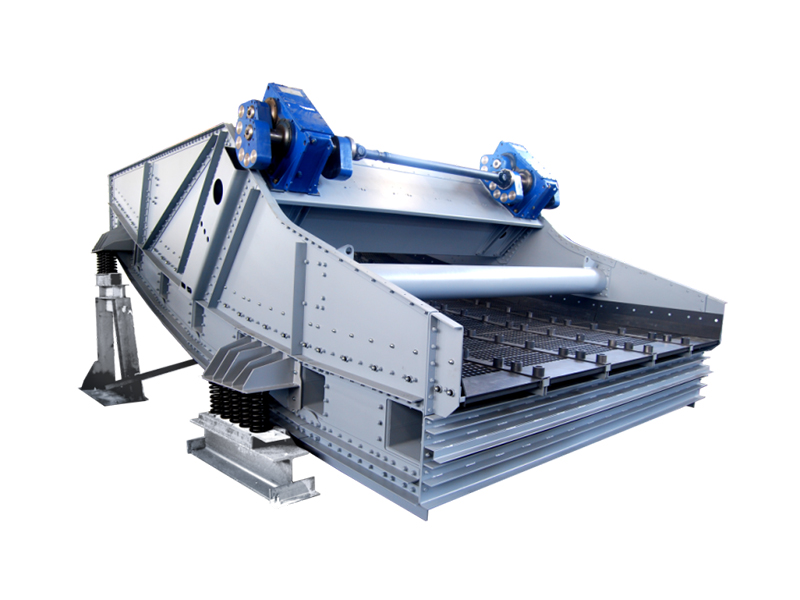
Analyzing material flow on traditional screens reveals severe mechanical limitations. When you dump 1,000 tons per hour of aggregate onto a flat deck, it creates a thick, dense bed at the feed end. This thick layer physically traps fine particles at the top of the pile. They cannot reach the screen media to pass through. Process engineers call this poor stratification. The fines simply ride on top of the larger rocks.
As the vibration forces the material forward, fines eventually work their way down. However, by the time they reach the apertures, the material has already traveled halfway down the deck. The thin bed at the discharge end then wastes the remaining available screening area. You end up using only a fraction of your expensive screen media effectively, forcing the equipment to work harder for less output.
The operational impact damages plant efficiency. You face hard limits on throughput capacity. Pushing more tonnage simply increases the bed depth and worsens the stratification problem. You also experience highly localized wear at the feed impact zone due to the concentrated mass. Poor stratification leads to higher rates of misplaced material, meaning valuable fines end up in your coarse product stockpile, requiring costly reprocessing.
The variable slope design attacks the stratification problem immediately. The steep initial angle creates a rapid stratification phase. High material velocity causes immediate thinning of the bed as soon as the feed hits the deck. The violent acceleration tears the material bed apart, allowing fines to instantly drop to the bottom and pass through the screen media.
To understand the mechanics, look at the distinct phases of material flow across the deck:
Initial Impact and Acceleration: Material hits the 45° feed section, rapidly accelerating to over 3 meters per second and thinning the bed instantly.
Rapid Stratification: Fines migrate to the bottom of the material layer and pass through the heavy-duty media immediately, removing up to 50% of the undersize volume in the first third of the machine.
Deceleration and Near-Size Sorting: The slope flattens to 15°, slowing the material to allow particles close to the aperture size more time to find an opening without being pushed past it.
Final Discharge: The remaining oversize material exits the 0° to 5° flat section at a controlled velocity, ensuring maximum precision before dropping into the discharge chute.
Velocity control ensures that you do not waste deck space. The fast feed end handles the bulk removal of obvious fines. The slow discharge end handles the precision sorting of near-size material. This division of labor across the deck maximizes overall separation efficiency and prevents the blinding that plagues standard screens.
Manufacturers offer these machines in various configurations to match specific circuit requirements. You must choose between single deck and double deck options based on your process flow. Single deck models excel at high-capacity scalping or simple two-product separation. They handle massive tonnages with minimal structural complexity, making them ideal for primary crushing circuits.
Double deck configurations operate by utilizing two parallel sloped decks. The linear vibration drives material across both surfaces simultaneously. This setup separates the feed into three distinct product sizes with exceptional precision. The top deck handles coarse scalping, protecting the delicate bottom deck from heavy impacts. The bottom deck then performs the fine separation, often utilizing much smaller apertures.
Selecting deck quantities depends heavily on your required particle size distribution (PSD). You must also evaluate plant height restrictions. Multi-deck units require significantly more vertical clearance for feed chutes, intermediate transfer points, and discharge hoppers. Retrofitting a double deck unit into an older plant often requires extensive structural modification to accommodate the increased height and complex chute work.
Generating the massive force required for equal thickness screening demands specialized drive systems. You cannot use simple circular motion drives or single-shaft mechanisms. These machines require heavy-duty geared exciters or dual unbalanced motors mounted on a massive machined drive beam. The exciters must generate a precise linear stroke to move the rock effectively.
Linear vibration is necessary to propel material across the flatter discharge sections. If the stroke angle is incorrect, material will stall on the 0° sections, causing catastrophic blinding and overflow. The line of action must pass exactly through the machine's center of gravity to ensure uniform stroke across the entire width of the deck. Mechanics typically set the stroke angle between 45° and 50° relative to the horizontal.
Modern engineering advancements focus heavily on structural integrity. These machines generate massive G-forces, often exceeding 4.5G to 5.5G during continuous operation. Manufacturers must use stress-relieved side plates, Huck bolts instead of welding, and heavy-duty cross beams. Advanced condition monitoring systems now track bearing temperatures, oil degradation, and vibration signatures to prevent catastrophic failure in continuous heavy-duty environments.
Specifying screen media across varying slopes presents a unique maintenance challenge. You cannot simply install the exact same panels from end to end. You must select between modular polyurethane, heavy-duty rubber, or woven wire based on the specific zone of the deck. Using a one-size-fits-all approach will result in premature wear or severe blinding.
Different aperture sizes and panel types are mandatory. The steep feed end experiences high impact, extreme velocity, and severe abrasive wear. You need 50mm thick, solid rubber impact panels or heavy-duty polyurethane here to absorb the blow. The flat discharge end experiences low velocity but carries a massive blinding risk from near-size particles. You need highly open, flexible media here to maintain precision and throughput.
Processing sticky or high-moisture materials complicates media selection further. Standard polyurethane will blind instantly if the clay content is too high. In these applications, process engineers integrate flip-flow panels or highly flexible polyurethane mats onto the discharge sections. The secondary vibration of these flexible mats actively ejects sticky particles, preventing blinding when processing difficult feeds like wet coal or clay-heavy aggregates.
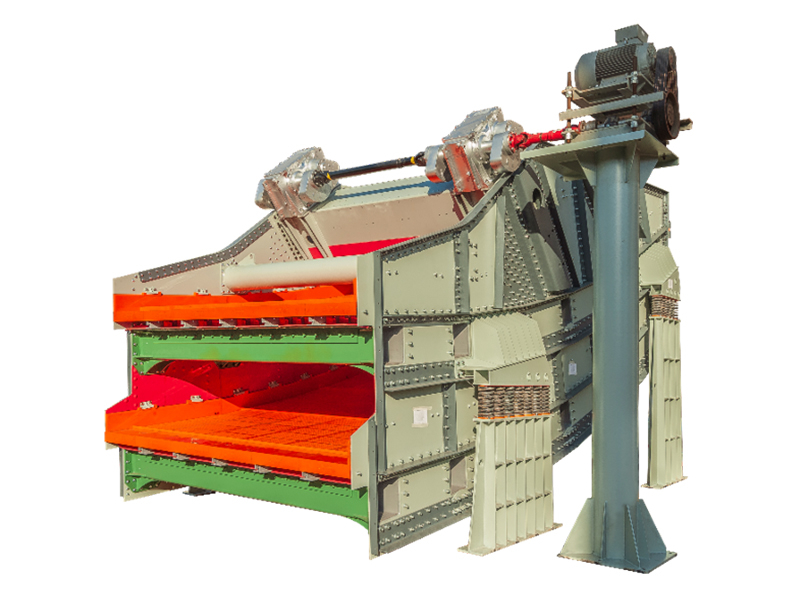
The primary reason engineers specify this equipment is raw capacity. The equal thickness principle allows for significantly higher tonnage per square meter compared to standard horizontal screens. By maintaining a thin bed and accelerating the feed, you can push up to 40% more material through the exact same physical footprint. A 3m x 9m variable slope machine will easily outpace a standard 3m x 9m flat deck.
This footprint efficiency holds immense value in brownfield plant upgrades. Older plants face severe space constraints. You cannot simply build a wider building to house larger screens. When production targets increase, replacing a traditional screen with a banana screen allows you to meet new tonnage goals without altering the existing steel framework or expanding the building footprint.
Capacity means nothing if the product is out of spec. The variable slope design drastically reduces pegging and blinding. A thin material bed ensures that particles do not force each other into the apertures under heavy pressure. Optimized residence time at the discharge end guarantees that near-size particles are accurately sorted, keeping your final product strictly within the required size parameters.
This precision directly impacts downstream processes. Crushing circuits operate far more efficiently when the screen removes all the fines before the crusher. Sending fines into a cone crusher causes packing, power spikes, and mechanical damage. Flotation cells in mineral processing require tightly controlled particle sizes to maximize chemical recovery. When screening efficiency improves, product consistency stabilizes across the entire plant.
You must address the reality of wear patterns when operating variable slope equipment. The high velocity at the feed end accelerates media wear rapidly. The material acts like sandpaper sliding down a 45° chute. You must mitigate this wear with dedicated ceramic-lined feed boxes, thick rubber impact plates, and specialized wear liners on the side plates.
Evaluating the overall lifecycle cost requires balancing factors. You face a higher initial capital expenditure to purchase the machine. You achieve a significantly reduced cost-per-ton processed due to the massive throughput increase. When properly configured with zoned screen media, you benefit from fewer required maintenance intervals, keeping the plant running longer between scheduled shutdowns.
You must define your ideal feed parameters before selecting this technology. These machines excel when the feed contains a high percentage of fines, operates at a high overall tonnage, and features variable moisture content. If your feed is mostly coarse rock with very few fines, the steep feed end provides no advantage, and a standard heavy-duty scalper is a better choice.
Primary industry applications rely heavily on this technology for fines removal. Coal preparation plants use them extensively for desliming at 0.5mm and drain-and-rinse applications to recover heavy media. Hard rock mining circuits use them ahead of secondary crushers to remove SAG mill discharge fines. High-capacity aggregate processing plants use them to produce manufactured sand and clean fine aggregates.
Identify scenarios where this technology is inappropriate. Low tonnage operations do not generate enough bed depth to justify the complex design. Scalping very large boulders will destroy the steep feed sections and damage the cross beams. Strict height limitations in underground operations often preclude the installation of multi-slope decks due to the massive vertical clearance required.
Providing a cost-benefit evaluation framework helps justify the investment. You must compare the higher upfront cost and complex drive mechanisms against long-term operational savings. The initial CapEx is substantial. The heavy-duty geared exciters, machined drive beams, and complex side plate geometry drive up manufacturing costs significantly compared to a flat deck.
The OpEx advantages quickly offset the initial price tag. You achieve long-term energy savings because you process more tons per kilowatt of drive power. You reduce screen media consumption per ton by utilizing specialized wear zones. Most importantly, you increase overall yield by recovering more valuable fines that would otherwise be lost to the coarse stockpile.
Evaluation Metric | Standard Horizontal Screen | Equal Thickness (Variable Slope) Screen |
|---|---|---|
Throughput Capacity | Baseline capacity limited by thick feed bed. | 30% to 40% higher capacity per square meter. |
Stratification Efficiency | Poor at feed end; fines trapped in upper bed. | Excellent; rapid acceleration forces immediate stratification. |
Footprint Requirement | Requires wider/longer decks for high tonnage. | Highly efficient; handles massive surges in compact spaces. |
Initial CapEx | Lower initial purchase price. | Higher initial cost due to complex geometry and exciters. |
Dynamic Load on Plant | Moderate structural requirements. | Massive dynamic loads requiring heavy-duty isolation. |
Highlighting critical engineering risks prevents costly installation failures. These machines are exceptionally heavy. The thick side plates, heavy cross beams, and massive geared exciters add significant dead weight. Furthermore, they generate massive dynamic loads compared to standard screens. A 30-ton machine pulling 5Gs transfers severe forces directly into the supporting structure.
You must conduct comprehensive structural audits for existing plants before installation. You cannot simply unbolt an old flat screen and drop a variable slope machine in its place. The steel framework will suffer fatigue failure. Integration requires heavy-duty steel coil isolation springs, specialized sub-frames, and reinforced concrete foundations to absorb the transmitted energy safely.
To implement a banana screen in your processing circuit, execute the following steps:
Conduct a comprehensive material flow analysis to determine the exact percentage of fines and moisture content in your current feed.
Consult with OEM structural engineers to calculate the dynamic load requirements and verify your existing plant framework can handle the increased forces.
Perform pilot testing on specific ore or aggregate samples to determine the optimal slope angles and screen media types for your material.
Audit your current screen media consumption and downtime logs to build an accurate operational efficiency comparison model.
As an industry leader in advanced screening and separation technologies, Shanghai Kminda Tech. Co., Ltd. brings decades of innovative engineering and manufacturing excellence to help mining and aggregate operations maximize throughput, solve processing bottlenecks, and optimize equipment lifespan.
A: A standard screen features a single flat or slightly inclined deck, resulting in a thick material bed at the feed end and a thin bed at the discharge. A banana screen uses a multi-sloped design, starting steep at the feed and flattening at the discharge, to maintain a constant, thin material bed depth across the entire surface.
A: Maintaining a constant bed depth maximizes the utilization of the entire screening area. It prevents thick material beds from trapping fine particles at the feed end, ensuring rapid stratification and eliminating the throughput bottlenecks that choke high-tonnage operations.
A: High-tonnage operations benefit the most. This includes coal preparation plants for desliming, hard rock mining circuits for pre-crusher scalping, and high-capacity aggregate processing plants that require efficient fines removal without expanding their existing building footprint.
A: It uses two parallel, variable-slope decks driven by a single linear vibration mechanism. The top deck scalps coarse material to protect the lower deck from heavy impacts, while the bottom deck performs precise fine separation, yielding three distinct product fractions simultaneously.
A: Yes, but they require specialized screen media. Process engineers integrate flexible polyurethane mats or flip-flow panels on the flatter discharge sections. The secondary vibration of these flexible panels actively ejects sticky particles, preventing the material from blinding the apertures.
A: The steep feed end experiences high material velocity, which accelerates abrasive wear. Operators mitigate this by installing heavy-duty rubber impact panels or thicker polyurethane media in the feed zone, while using high-open-area media at the slower discharge end to maintain precision.


